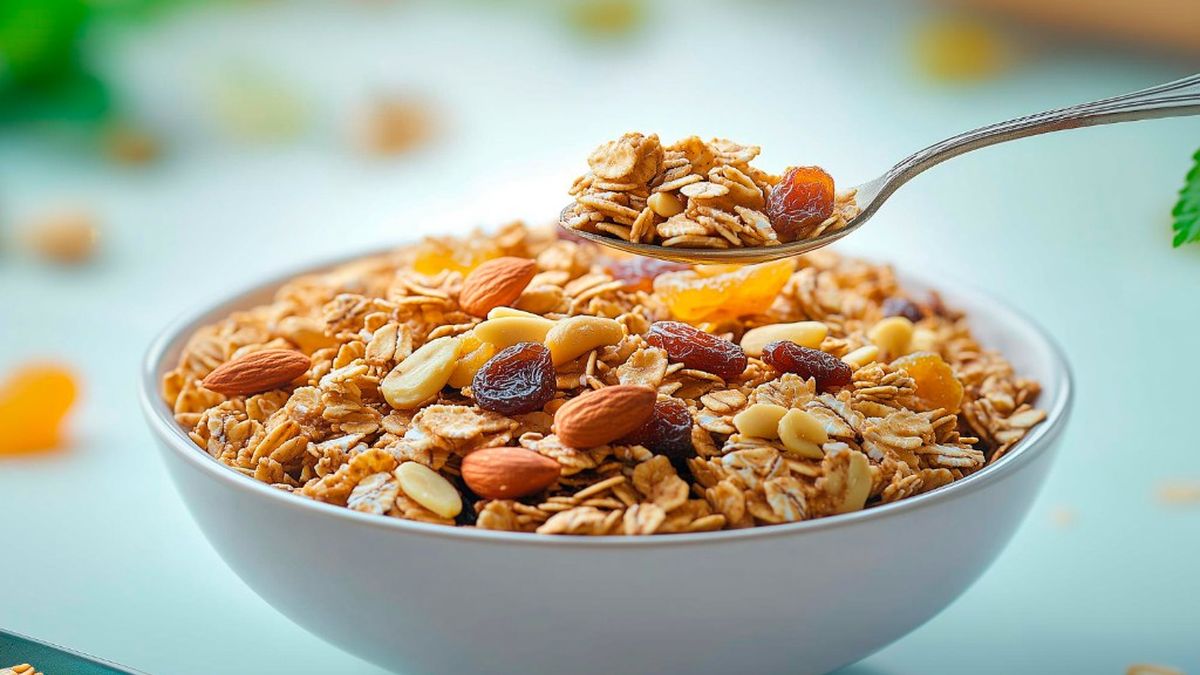
Oats are the one breakfast food in India that arrived with a health claim printed on the box — and the claim is real. It is also one of the very few food claims in the world with a regulated, numeric dose behind it. Which makes it unusually easy to check whether your breakfast is actually doing the thing.
Most of the time, it is not. Not because oats do not work, but because a 40 g sachet is roughly a third of the dose.
How many oats? The real number is 3 grams
In 2010, EFSA's panel on dietetic products, nutrition and allergies reviewed 22 references, including three meta-analyses and 19 randomised controlled trials, and concluded that a cause-and-effect relationship has been established between consumption of oat beta-glucan and lowering of blood LDL-cholesterol concentrations. The panel noted that most trials at doses of at least 3 g a day showed a statistically significant decrease in LDL cholesterol, and that in order to bear the claim, foods should provide at least 3 g of oat beta-glucan per day.
The EU wrote that into law the following year. Commission Regulation (EU) No 1160/2011 authorises the wording "Oat beta-glucan has been shown to lower/reduce blood cholesterol. High cholesterol is a risk factor in the development of coronary heart disease" — on two conditions: the claim can only be used on foods providing at least 1 g of oat beta-glucan per quantified portion, and the consumer must be told that the beneficial effect is obtained with a daily intake of 3 g.
So the real question is not "are oats good for cholesterol". It is: how much beta-glucan is actually in the oats you bought?
The answer is: it varies a lot, and the pack usually will not tell you. Published composition tables put beta-glucan at roughly 4–5% of dry weight in whole-grain oat products, 1–3% in oat endosperm flour, and 8–12% in conventional oat bran products. A 2026 analysis of 95 oat cultivars in npj Science of Food found a range of roughly 2.4–4.3% across varieties, and drew the conclusion that matters here: to reach 3 g from a low beta-glucan cultivar at 2.5%, you would need three 40 g portions of porridge a day, while a high beta-glucan cultivar at 6% needs just over one 50 g bowl. The authors state plainly that most consumers, who eat one bowl of porridge for breakfast, are unlikely to reach 3 g a day with average or low beta-glucan varieties.
| Form | Typical beta-glucan | Rough amount for 3 g/day | GI behaviour | Practical note |
|---|---|---|---|---|
| Steel-cut / coarse oatmeal | ~4–5% | ~60–75 g dry | Low (Diabetes UK) | Best combination of dose and blood-sugar behaviour; needs 15–20 minutes to cook |
| Rolled / old-fashioned oats | ~4–5%, cultivar-dependent | ~60–75 g dry | Low to medium | The practical default for most Indian kitchens |
| Quick-cooking rolled oats | ~4–5% | ~60–75 g dry | Medium | Same beta-glucan, faster digestion because the flake is thinner |
| Instant oats, plain | ~4–5% | ~60–75 g dry, i.e. 2 sachets or more | Medium to high | One sachet is not a dose. Check the gram weight on the packet |
| Instant flavoured "masala" oats | Lower — diluted with other ingredients | Often not achievable in sensible portions | Medium to high | Check the salt per serving; several brands are high |
| Oat bran (oat chokar) | ~8–12% | ~25–35 g | Low | The most efficient way to hit 3 g. Stir into dalia, dahi or roti atta |
| Oat flour / oats atta | Variable; often lower | Depends entirely on the blend | Medium | Usually blended with wheat. Read the ingredient order |
| Oat milk | Typically low per glass | Not a realistic route to 3 g | Medium | Fine as a milk substitute; not a cholesterol strategy |
The honest conclusion from that table: if lowering LDL is your goal, oat bran is the efficient route and a single small sachet of instant oats is not.
What beta-glucan actually does
Beta-glucan is a soluble fibre — specifically a mixed-linkage polymer of glucose — and its usefulness comes from viscosity. In the gut it forms a thick gel, and that gel does two separate jobs:
- It interferes with cholesterol and bile acid handling in the small intestine. EFSA's panel noted strong evidence supporting the biological plausibility of the LDL-lowering effect, alongside the trial data.
- It slows the movement and absorption of glucose. The same viscosity that traps bile acids also delays glucose absorption, which blunts the rise in blood sugar after a meal.
One consequence worth knowing: viscosity depends on molecular weight and concentration, not just on total grams. Heavily processed oats where the beta-glucan has been broken down can contain the same number on paper and behave less well in practice. This is the mechanistic reason the "steel-cut versus instant" distinction is not just food snobbery.
What oats do to your blood sugar
For readers who came here because of a diabetes diagnosis rather than a lipid profile, the headline is favourable but form-dependent.
Diabetes UK classifies coarse oatmeal, such as steel-cut oats, as a low-GI food — GI 55 or below — and their practical suggestion is to try coarse oatmeal or unsweetened oat-based muesli instead of sugar-sweetened breakfast cereals. They also place refined and sugar-sweetened breakfast cereals firmly in the high-GI band.
There is a separate, stricter European claim for the post-meal glucose effect of beta-glucans, which requires roughly 4 g of oat or barley beta-glucan for every 30 g of available carbohydrate in the meal. That is a demanding ratio, and worth knowing mainly because it explains why a spoonful of oats stirred into a large carbohydrate meal will not flatten your post-meal spike.
And remember the rule from our GI article: the amount of carbohydrate in your portion affects your blood sugar more than GI alone. A big bowl of low-GI oats is still a big bowl of carbohydrate. Two useful additions, both consistent with Diabetes UK's point that protein, fat and fibre lower a meal's overall GI:
- Milk or plain dahi rather than water — protein and fat slow the whole thing down.
- A spoon of seeds and a few nuts, which also brings you toward ICMR-NIN's 35 g daily nuts-and-seeds reference amount.
The truth about the masala oats packet
This section exists because the Indian oats market is dominated by flavoured sachets, and they are a different food from the thing the research was done on.
- The portion is too small. If a sachet is 35–40 g and the oats inside are perhaps 4% beta-glucan, you are getting well under 2 g — and in flavoured products the oats are diluted by vegetables, starches, flavourings and salt, so the real figure is lower still.
- The salt is often significant. ICMR-NIN and WHO both cap salt at 5 g a day for adults — about one teaspoon, or 2 g of sodium. A savoury sachet can take a meaningful bite out of that before you have eaten anything else. ICMR-NIN's guideline on reading food labels exists for precisely this.
- Sweet variants add free sugars. WHO advises free sugars stay under 10% of daily energy and ideally under 5%, and ICMR-NIN asks that added sugar be restricted to less than 5% of daily energy.
- The claim on the box may be legal and still not apply to your bowl. Under the EU rule the claim needs only 1 g per portion — a third of the effective daily dose — with a mandatory note telling you that you need 3 g a day. Most people read the claim and skip the note.
None of this makes masala oats a bad food. It makes it a convenient savoury snack that happens to contain oats — which is a fine thing to be, and a different thing from a cholesterol intervention.
How to eat oats in an Indian kitchen
Three ways to get to a real dose without eating porridge three times a day:
- Make it savoury and make it bigger. Oats upma with 60–75 g of dry rolled oats, mustard seeds, curry leaves, onion, carrot, peas and a fistful of peanuts. You have hit the beta-glucan target, added vegetables toward the 400 g daily mark, and got protein and fat in the same bowl.
- Use oat bran as an additive. Two to three tablespoons of oat bran gets you close to 3 g on its own. Stir it into dalia, into besan chilla batter, into dahi, or work it into the atta for roti. This is the highest-yield, lowest-effort route.
- Sweet, but honest. Overnight oats with plain dahi or milk, chopped guava or apple for sweetness instead of sugar or honey, and a spoon of alsi or pumpkin seeds. WHO counts honey as a free sugar, so it is not a loophole.
And do not let oats crowd out everything else. ICMR-NIN's position is to diversify staples — at least half your cereal as whole grain, with millets explicitly recommended. A week that rotates oats, jowar, bajra, ragi and barley is better than a week of oats.
Who oats are not the best option for
- If your cholesterol problem is mostly a saturated fat problem. The NHS's list of things to eat less of is blunt and India-relevant: butter, lard and ghee, cream and cheese, cakes and biscuits, fatty meat, and foods containing coconut oil or palm oil. WHO advises no more than 10% of total energy from saturated fat and no more than 1% from trans fat. Adding oats while the ghee and coconut oil stay untouched is working against yourself.
- If you have IBS or significant bloating. A sudden jump in soluble fibre can worsen symptoms. Ramp up over two to three weeks and drink more water.
- If you are on cholesterol medication. The NHS notes you may need medicine if cholesterol has not come down with diet and lifestyle change, or if you are at high risk of heart attack or stroke. Oats are an addition to a statin, not a replacement for one. That decision is your doctor's.
- If cost is the constraint. Barley (jau) and whole-grain millets are far cheaper per kilo in most Indian markets and carry their own fibre benefits. Oats are not the only route to better lipids — the NHS also lists oily fish, olive and rapeseed oils, wholegrains, nuts, seeds, fruits and vegetables, plus at least 150 minutes of moderate exercise a week.
This is not medical advice. High cholesterol usually causes no symptoms and can only be found on a blood test, and decisions about statins or other lipid medicines belong to your doctor. Do not stop or reduce a prescribed medicine because you have started eating oats. If you have diabetes and use insulin or a glucose-lowering drug, changing your breakfast carbohydrate can change your dose requirements — discuss it first.
Frequently asked questions
How many oats should I eat a day for cholesterol?
The dose is defined by beta-glucan, not by oats. EFSA concluded that foods should provide at least 3 g of oat beta-glucan a day to carry the cholesterol-lowering claim. Because oats range from roughly 2.4% to 6% beta-glucan by cultivar, that works out to somewhere between about 50 g and 120 g of dry oats a day, or roughly 30 g of oat bran.
Does a masala oats packet give the same benefit?
Usually not. A typical single sachet is far too small to supply 3 g of beta-glucan, and flavoured versions add salt and sometimes sugar. Under EU rules the cholesterol claim can only be used on foods providing at least 1 g of oat beta-glucan per quantified portion, and consumers must be told the benefit needs 3 g a day. Read the pack.
Do oats raise blood sugar if you have diabetes?
It depends on the form. Diabetes UK classifies coarse oatmeal, such as steel-cut oats, as a low-GI food and recommends it in place of sugar-sweetened breakfast cereals. Highly processed instant oats behave less favourably, and flavoured sachets with added sugar behave worst. Portion size still matters more than GI alone.
Are oats better than roti and dalia?
Not necessarily better — different. Oats have a specific, well-documented beta-glucan effect on LDL cholesterol that atta and dalia do not have. But ICMR-NIN's advice is to diversify staples and get at least half your cereal as whole grain, so oats work best as one rotation option alongside jowar, bajra, ragi and barley.
Sources
- EFSA Panel on Dietetic Products, Nutrition and Allergies. Scientific Opinion on the substantiation of a health claim related to oat beta-glucan and lowering blood cholesterol and reduced risk of (coronary) heart disease — EFSA Journal 2010;8(12):1885. The source for the 3 g a day figure, the cause-and-effect conclusion and the evidence base of 22 references including three meta-analyses and 19 randomised controlled trials.
- Commission Regulation (EU) No 1160/2011 — authorised health claims — the legal wording of the oat beta-glucan claim, the "at least 1 g per quantified portion" condition and the mandatory consumer information about the 3 g daily intake.
- Comprehensive nutritional analysis of 95 oat cultivars reveals large variability in nutritional profile: protein, starch, fat, β-glucan and fibre — npj Science of Food, 2026. The source for the cultivar beta-glucan range and the finding that a single daily bowl of average or low beta-glucan oats is unlikely to reach 3 g.
- Oats and Health — Beta-glucan composition of oat products — the composition table used for the whole-grain, oat bran and endosperm flour beta-glucan percentages.
- Diabetes UK — Glycaemic index and diabetes — coarse oatmeal as a low-GI food, the GI bands, and the role of protein, fat and fibre in lowering a meal's GI.
- NHS — How to lower your cholesterol — the eat-more and eat-less food lists including ghee, coconut and palm oil, and the 150-minutes-a-week exercise target.
- NHS — High cholesterol — why it is symptomless, how it is tested and when medicine is considered.
- WHO — Healthy diet fact sheet — the saturated fat (≤10% of energy), trans fat (≤1%), free sugars (<10%, ideally <5%), salt (<5 g) and fibre (≥25 g) figures.
- ICMR-NIN — Dietary Guidelines for Indians, 2024 — the 35 g nuts and seeds reference amount, the added sugar and salt limits, the "at least half your cereal as whole grain" and diversify-with-millets recommendations, and the guideline on reading food labels.
Related reads — what to read next
- Start at the top: our full Diabetes hub — monitoring, medication basics and what daily coaching involves.
- Glycemic Index of 50 Common Indian Foods — where oats sit relative to every other Indian breakfast, and why portion beats GI.
- Related hubs: Weight Management — soluble fibre matters to both.