What thyroid disorders are
A thyroid disorder is any problem with the thyroid, a small butterfly-shaped gland in the lower front of your neck. Its hormones help your body use energy, stay warm and keep the brain, heart and muscles working. The pituitary gland controls it by releasing thyroid-stimulating hormone (TSH).
Underactive and overactive thyroid
Hypothyroidism means the thyroid makes too little hormone, so the body slows down. Hyperthyroidism (also called thyrotoxicosis) means it makes too much, so the body speeds up. They need opposite treatments, so “I have thyroid” is not enough: ask which one you have.
Terms you will see on reports
- Hashimoto’s thyroiditis: the immune system attacks the thyroid by mistake. It is the most common cause of an underactive thyroid.
- Graves’ disease: antibodies push the thyroid to make too much hormone. About 4 in 5 people with an overactive thyroid have it.
- Subclinical: TSH is outside the normal range but thyroid hormone (free thyroxine (T4)) is still normal. It is a blood-test finding, often without symptoms.
- Goitre (galgand): a swollen thyroid. It can occur with high, low or normal hormone levels.
- Nodules: lumps in the thyroid. National Institute for Health and Care Excellence (NICE) notes that goitre and nodules are common and usually not cancerous.
- Thyroiditis: inflammation, sometimes after a viral infection or a pregnancy, which can cause a temporary overactive or underactive phase.
This page covers adults. Thyroid cancer and thyroid problems in children need specialist information.
Symptoms and signs
Thyroid symptoms are vague, and many people have only a few. An underactive thyroid usually develops slowly and can include:
- extreme tiredness, and feeling cold more than others;
- weight gain and constipation;
- low mood, poor concentration or forgetfulness;
- dry skin, dry hair or hair loss, and a hoarse voice;
- irregular or heavy periods.
An overactive thyroid can start suddenly or slowly and can include:
- a fast, pounding or irregular heartbeat (palpitations);
- nervousness, anxiety, irritability or difficulty sleeping;
- feeling hot, sweating more, and trembling hands;
- weight loss despite a normal or bigger appetite, and frequent loose motions;
- lighter or less frequent periods, hair loss, or a swelling in the neck;
- in Graves’ disease, gritty, red or bulging eyes.
Weight and hair: why many people get tested
Weight gain and hair fall often prompt a thyroid test, but the thyroid rarely explains them fully. The American Thyroid Association (ATA) says weight gain from an underactive thyroid is usually modest and mostly salt and water: for most people about 5–10 pounds (roughly 2–4.5 kg). Once levels are treated, your ability to gain or lose weight is the same as anyone else’s.
Conditions that can look similar
Look-alikes include iron-deficiency anaemia, menopause, depression, anxiety, polycystic ovary syndrome (PCOS), poor sleep and too much caffeine. NICE warns that thyroid symptoms in menopausal women may be mistaken for menopause. Only a blood test can tell.
Causes and risk factors
Most thyroid disorders in adults are autoimmune, meaning the immune system targets the thyroid. The thyroid also needs iodine to make its hormones, which is why iodised salt matters.
An underactive thyroid can also follow thyroiditis, thyroid surgery, radioactive iodine or neck radiotherapy, too little iodine, or certain medicines. An overactive thyroid is usually Graves’ disease; overactive nodules and thyroiditis are other causes.
Risk is higher if you are a woman, a close relative has had a thyroid disorder, you have another autoimmune condition such as type 1 diabetes, or you have recently been pregnant. National Health Service (NHS) says an overactive thyroid is about 10 times more common in women than men.
Thyroid in India
A 2011 study tested 5,360 adults in eight Indian cities and found hypothyroidism in 10.95%, including 3.47% who had never been diagnosed. Women were affected about three times as often as men (15.86% versus 5.02%), 8.02% had subclinical hypothyroidism, and inland cities had higher rates than coastal ones. The study covered only urban adults and was funded by a thyroid-medicine maker, so treat it as a strong signal, not a national census. India has iodised salt nationally since 1983, and 88% of participants said they used it.
Weight and waist: Indian cut-offs
If weight is part of your worry, use Indian thresholds, not World Health Organization (WHO)’s 25 and 30. Because Indians carry more body fat at the same body mass index (BMI), Indian Council of Medical Research–National Institute of Nutrition (ICMR-NIN) calls 23–27.5 overweight and above 27.5 obese; Disha’s BMI calculator uses 25 for obesity, from an earlier Asian Indian consensus. A waist above 90 cm in men or 80 cm in women signals higher risk.
Diagnosis and tests
Thyroid disorders are diagnosed with blood tests, read alongside your symptoms, history and a neck examination. NICE suggests starting with TSH alone in most adults. It adds free T4 if TSH is high, and free T4 and free triiodothyronine (T3) if TSH is low.
| Test | What it measures | When it is useful | Important limitation |
|---|---|---|---|
| TSH | The pituitary’s signal to the thyroid: high usually means underactive, low usually means overactive | The first test for most adults with suspected thyroid disease | Can be misleading during an acute illness, in pregnancy or with pituitary disease; a mildly abnormal result needs repeating |
| Free T4 | The thyroid hormone your body can use | When TSH is abnormal, to separate overt from subclinical disease | Pregnancy changes how it is measured and interpreted |
| Free T3 or T3 | The active hormone, mostly made from T4 | When TSH is low and an overactive thyroid is suspected | The ATA says T3 is not often needed to diagnose an underactive thyroid |
| Thyroid peroxidase antibodies (anti-TPO) | Signs of autoimmune thyroid disease, such as Hashimoto’s | When TSH is raised, to judge the cause and the chance of progression | Common in people with normal thyroid function; NICE advises not repeating the test |
| TSH receptor antibodies (TRAb) | Antibodies that drive Graves’ disease | When an overactive thyroid is confirmed and the cause is unclear | Not used to assess an underactive thyroid |
| Thyroid ultrasound | The size and structure of the gland, and any nodules | When a lump or swelling can be felt | Does not measure how the thyroid is working; finds many small, harmless nodules |
Often misunderstood. Indian labs sell “thyroid profile” packages of T3, T4 and TSH, but for most adults TSH is the starting point. Tell your doctor about biotin supplements, because NICE warns they can make results falsely high or low, and avoid testing during an acute illness. A clinician should interpret every result, because the same number can mean different things in pregnancy, older age or illness. Once treatment is stable, monitoring is usually a yearly TSH test.
Where Indian and international advice differ
- Mildly high TSH (subclinical hypothyroidism). The Indian Thyroid Society’s 2022 consensus says adults under 65 with a TSH of 10 or more “should be treated”, and healthy people without symptoms at 4.5–9.9 do not need treatment. NICE says “consider” treatment at 10 or more on two tests three months apart. A 2019 British Medical Journal (BMJ) panel recommended against treating most adults with subclinical hypothyroidism, except in pregnancy or with TSH above 20. All agree on one step: repeat a raised TSH after 2–3 months before deciding.
- Testing in pregnancy. The Indian government’s 2014 guideline screens only high-risk pregnant women at the first antenatal visit, and treats a TSH above 2.5 in the first trimester or above 3 later. The Indian Thyroid Society and a 2021 consensus of Indian endocrinologists prefer testing every pregnant woman. That consensus calls the 2.5 and 3 cut-offs obsolete. The ATA’s 2017 guideline suggests an upper limit of about 4.0 from late first trimester when local ranges are unavailable, but found too little evidence to recommend for or against testing everyone. For Indian readers: ask for a TSH test before pregnancy or at your first antenatal visit, and let your doctor say which cut-off applies.
- Screening healthy adults. Here the bodies broadly agree. The US Preventive Services Task Force found insufficient evidence for screening adults without symptoms, and the Indian Thyroid Society supports targeted testing for people at higher risk, planning pregnancy or with non-specific symptoms. NICE advises testing people with type 1 diabetes or other autoimmune diseases, but not solely because of type 2 diabetes.
Treatment and management overview
Medical treatment
Treatment depends on which problem you have and why. An underactive thyroid is usually treated with a daily tablet that replaces the missing hormone, often for life, with the dose adjusted using blood tests. An overactive thyroid may be treated with medicines that reduce hormone production, radioactive iodine or surgery, usually decided with an endocrinologist; other medicines can calm a racing heart meanwhile. Thyroiditis often settles on its own.
Lifestyle management
Food, movement and sleep support your energy, weight, heart and bones, but cannot replace missing thyroid hormone, switch off Graves’ disease, cure Hashimoto’s or normalise an abnormal TSH on its own.
Never stop or change a thyroid medicine because you feel better or have lost weight; the ATA says stopping should happen only with your doctor’s help. Calcium and iron supplements, antacids and some other products affect how thyroid tablets are absorbed, so agree timing with your doctor or pharmacist.
What Disha can and cannot do
Disha, an AI health coach, can help with meals, movement, sleep and habits. It cannot diagnose, interpret tests, prescribe or change medicine, or provide emergency care.
Medical disclaimer. This page is general education for adults (18+), not a diagnosis or an individual treatment plan. Do not start, stop or change any medicine or supplement because of it. If you are pregnant, trying to conceive, breastfeeding, or have a current or past eating disorder, get individual advice before changing how you eat or exercise. For an emergency, contact local emergency services; Disha does not provide emergency care.
Indian food and nutrition
There is no special thyroid diet. Most adults with a thyroid disorder can follow ICMR-NIN’s Dietary Guidelines for Indians 2024. Its “My Plate for the Day” makes vegetables, fruits and greens about half the day’s food, and keeps cereals and millets to no more than 45% of energy, with pulses alongside. At lunch or dinner, try half a plate of sabzi or salad, a quarter dal, chana, paneer, dahi, eggs, fish or chicken, and a quarter roti, rice or millet. This is a starting picture, not a prescription.
Iodine: check the salt packet
ICMR-NIN says: “Use iodized salt,” with a maximum of 5 g of added salt a day, about one teaspoon. It adds that pink (sendha) and black (kala) salt contain almost the same sodium, so they are not healthier. The National Institutes of Health (NIH) notes separately that non-iodised salts are low in iodine. If sendha namak has replaced iodised salt in daily cooking, switch back and keep sendha for fasting days.
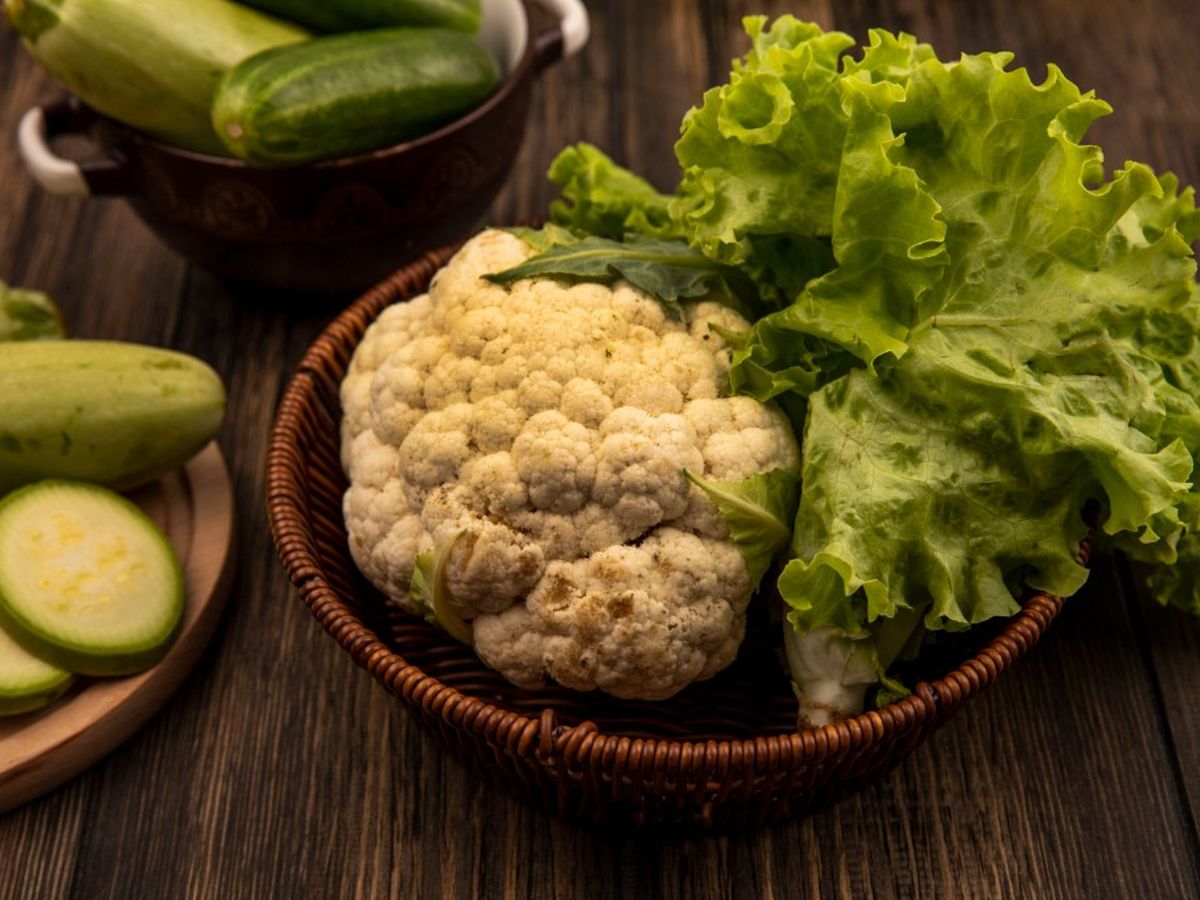
Gobhi is not your thyroid’s problem; low iodine is. Keep the gobhi sabzi and check that your salt packet says “iodised”.
Cabbage, cauliflower, sarson, soya and millets contain goitrogens, which can interfere with iodine uptake. NIH says this matters mainly where iodine deficiency is common; with adequate iodine, “reasonable amounts” are “not a concern”. Our guide to goitrogens in Indian cooking covers each food, cooking and tablet timing.
| Instead of | Try | Why |
|---|---|---|
| Only sendha or pink salt in daily cooking | Iodised salt, within 5 g a day, with sendha saved for vrat | Iodised salt is India’s main iodine source; the sodium is the same |
| Dropping gobhi, patta gobhi, sarson or soya | Cooked, in normal portions, as part of a varied week | Goitrogens matter mainly when iodine intake is low |
| Kelp, iodine or selenium capsules “for thyroid” | Your usual dahi, milk, eggs or fish, and a question to your doctor first | Too much iodine can itself cause thyroid problems |
| A crash diet to beat “thyroid weight” | Your usual meals with a smaller cereal portion, more sabzi and a katori of dal | Once levels are treated, weight responds as it does for anyone |
NIH notes that people with autoimmune thyroid disease can react to iodine intakes safe for others, and needs change in pregnancy and breastfeeding, so ask your doctor before any iodine or selenium supplement.
Movement, sleep and stress
ICMR-NIN advises adults to do 30–60 minutes of moderate activity on at least five days a week, or 15 minutes of vigorous activity on five days. It adds muscle-strengthening exercises on at least two days. A brisk walk after dinner, the stairs, yoga, chair squats or carrying the sabzi bag home all count.
Strength training matters because an untreated or poorly controlled thyroid disorder can weaken bones. If your thyroid is overactive and not yet controlled, or your heart races at rest, check with your doctor before strenuous exercise, as you should in pregnancy or with a heart condition.
Sleep and stress overlap with thyroid symptoms. An overactive thyroid can cause poor sleep and anxiety; an underactive one, tiredness and low mood. Stress, caffeine and alcohol can cause palpitations on their own. If tiredness or low mood continues once your TSH is back in range, tell your doctor rather than assuming it is still the thyroid.

DishaAI Health Coach
Turn this into a routine that fits your kitchen
Disha, an AI health coach, starts with an onboarding call of about 15–20 minutes, then helps you plan meals, movement and sleep around your day. It works alongside your doctor, not instead of them.
Download Disha freeMyths and unsupported claims
| Claim | What the evidence says | What to do instead |
|---|---|---|
| “With thyroid, stop eating gobhi, cabbage, soya and millets.” | Goitrogens matter mainly where iodine is lacking. | Keep normal cooked portions and use iodised salt. |
| “Sendha or pink salt is better for your thyroid.” | ICMR-NIN says sodium is almost the same across salts and advises iodised salt; the NIH notes non-iodised salts are low in iodine. | Use iodised salt daily, within 5 g. |
| “Once you start thyroid tablets, the extra weight will melt away.” | Thyroid-related weight gain is usually modest; treatment restores normal weight regulation, not weight loss. | Work on food, activity and sleep too. |
| “Stop the tablet once you feel better.” | An underactive thyroid usually needs lifelong treatment; feeling well often means the dose is right. | Keep taking it as prescribed and discuss any change with your doctor. |
When to see a doctor
Emergency: get help now
- Difficulty breathing, or a wheezing noise when you breathe, with a neck swelling.
- Palpitations that do not settle, or that come with chest pain, breathlessness or fainting.
- Signs of a thyroid storm, a rare, life-threatening flare of an overactive thyroid: a very fast heartbeat with high fever, severe agitation or confusion, yellow skin or eyes, or loss of consciousness.
- Severe drowsiness or confusion in someone with a severe or untreated underactive thyroid, especially an older person. This can signal myxoedema coma, a rare emergency.
- Fever or a severe sore throat while taking medicine for an overactive thyroid. The ATA advises seeking care immediately for a blood count.
Prompt review: within days to a few weeks
- A neck lump or swelling that is new or growing quickly, or that comes with a hoarse voice or trouble swallowing.
- Palpitations that keep coming back or last more than a few minutes.
- Bulging, red or painful eyes, or double or blurred vision.
- Pregnancy, or planning a pregnancy, if you already have a thyroid condition. Tell your doctor straight away, because treatment usually needs changing.
- Yellow eyes or skin, itching or dark urine while taking medicine for an overactive thyroid.
Routine review
Book an appointment for lasting tiredness, unexplained weight change, hair fall, feeling unusually cold or hot, or changed periods. If already on treatment, go back if symptoms return or you start or stop calcium, iron or biotin supplements.
When specialist input may help
A physician can manage most underactive thyroid care. An endocrinologist usually leads care for an overactive thyroid, thyroid disease in pregnancy (shared with your obstetrician), or results that do not add up. A surgeon or ENT specialist assesses suspicious lumps, and an eye specialist treats thyroid eye disease.
How Disha can help
Disha is an AI health coach that chats and calls in Hindi, English and Hinglish; it does not replace your doctor. Its onboarding call of about 15–20 minutes is with Disha, the AI, not a human doctor or dietitian. Disha helps you plan meals around familiar Indian food, build movement and sleep routines, and stick to the plan agreed with your doctor. It does not diagnose, prescribe or adjust thyroid medicine. The app is free to download; coaching is paid, with prices in the app.
Frequently asked questions
Can I keep eating normal Indian food with a thyroid problem?
Yes. There is no special thyroid diet, so roti, rice, dal, sabzi, dahi, idli and millets can stay. Use iodised salt within about a teaspoon a day, and keep cooked gobhi, cabbage and soya in normal portions. What helps most is a balanced plate with plenty of vegetables and protein. Pregnancy, other conditions and your medicines can change your needs, so ask your doctor about an individual plan.
Does lifestyle still matter if I already take thyroid medicine?
Yes. Medicine corrects the hormone level; food, activity and sleep support your weight, energy, heart and bones. Neither replaces the other. A routine also makes it easier to take your tablet consistently. Never stop, reduce or change a thyroid medicine because you feel better or have lost weight; discuss any change first with the doctor who prescribed it.
How long does it take to feel better after starting thyroid treatment?
It varies. The ATA says blood tests are usually repeated 6–8 weeks after starting or changing a dose, and several adjustments may be needed. NICE notes that if TSH was very high, it can take up to six months to return to normal. Keep a note of your energy, weight and sleep, and review progress with your doctor rather than changing anything yourself.
Can a thyroid problem be cured or reversed?
It depends on the type. Thyroiditis after a virus or a pregnancy often settles by itself. Most people with an underactive thyroid need treatment for life, though they can live normally with the right dose. An overactive thyroid can be controlled, and surgery or radioactive iodine can end it, but these usually lead to lifelong hormone replacement. No diet reverses a thyroid disorder.
Which thyroid tests should I discuss with my doctor?
Start with TSH. If it is high, free T4 shows whether the problem is overt or subclinical, and anti-TPO antibodies can show whether it is autoimmune. If TSH is low, free T4 and T3 are added, and TSH receptor antibodies can confirm Graves’ disease. An ultrasound is for a lump you or your doctor can feel. Mention any biotin supplements before testing.
When should I get medical help urgently?
Seek emergency care for trouble breathing with a neck swelling, palpitations with chest pain, breathlessness or fainting, or a racing heart with high fever and confusion. On medicine for an overactive thyroid, fever or a severe sore throat needs immediate care. See a doctor within days for a fast-growing neck lump, trouble swallowing, bulging eyes or vision changes.
Is my tiredness thyroid, anaemia or menopause?
It could be any of them, or something else. Iron-deficiency anaemia and menopause share symptoms with thyroid disease, including tiredness, palpitations and changes in periods, and NICE warns that thyroid symptoms in menopausal women can be mistaken for menopause. Symptoms cannot separate them, so your doctor may check TSH and a blood count together.
Should I stop eating gobhi, cabbage or soya if I have a thyroid problem?
No. This is one of the commonest pieces of thyroid advice in India, and it misses the point. Goitrogens in these foods matter mainly when iodine intake is low; NIH says reasonable amounts are not a concern for most people with adequate iodine. Keep them in cooked, normal portions, use iodised salt, and ask your doctor about timing soya around your tablet.
Is my weight gain because of my thyroid?
Partly, at most. The ATA says weight gain from an underactive thyroid is usually modest and mostly salt and water, about 2–4.5 kg for most people. If your other symptoms improve with treatment but your weight does not, the thyroid was probably not the only cause. Once levels are normal, weight responds to food, activity and sleep as it does for anyone.
Do I need a thyroid test in pregnancy?
Ask for one. Indian guidance differs: the government’s 2014 guideline screens high-risk pregnant women, while the Indian Thyroid Society prefers testing every pregnant woman at the first antenatal visit. If you already have a thyroid condition, tell your doctor as soon as you plan or confirm a pregnancy, because treatment usually needs adjusting. Pregnancy cut-offs differ, so let your doctor interpret the result.
My TSH is slightly high. Do I need medicine?
Not necessarily. A mildly raised TSH with normal free T4 is called subclinical hypothyroidism, and it often returns to normal. Guidelines advise repeating the test after 2–3 months before deciding. The Indian Thyroid Society says healthy adults without symptoms and with a TSH of 4.5–9.9 do not need treatment; a TSH of 10 or more, pregnancy or symptoms change the discussion.
Related reads
Thyroid articles
- Hypothyroidism diet in India: what to eat and what to limit: an Indian thyroid plate, iodised salt, tablet timing with chai, and an example day. No special foods needed.
- Goitrogenic foods in Indian cooking: what your thyroid needs to know: gobhi, soya, bajra and sabudana, food by food: why iodine matters more and what cooking changes.
- Thyroid-stimulating hormone (TSH) normal range, triiodothyronine (T3) and thyroxine (T4): how to read your thyroid report: each line of your thyroid report explained, why your lab’s range applies, and why a result is often retested.
Related condition hubs
- Weight management without fad diets: overlaps on unexplained weight change and Asian BMI and waist cut-offs.
- Hair loss and its nutritional drivers: overlaps on hair fall, which can occur with both underactive and overactive thyroid.
- PCOS symptoms, tests and treatment: overlaps on irregular periods and weight change; a TSH test is part of the PCOS work-up.
- Menopause and perimenopause support: overlaps on tiredness, palpitations and period changes that can be mistaken for one another.
Disha tools
- Calculate BMI using Indian risk cut-offs: a screening number that does not capture waist, muscle or individual health.
- Estimate calories in Indian household servings: useful for portions, with values treated as estimates.
Sources
- Unnikrishnan AG, Kalra S, Sahay RK, Bantwal G, John M, Tewari N — Prevalence of hypothyroidism in adults: An epidemiological study in eight cities of India — Indian Journal of Endocrinology and Metabolism, 2013 — observational study of 5,360 urban adults in 2011: 10.95% hypothyroidism, 3.47% undetected, 15.86% of women versus 5.02% of men, 8.02% subclinical, inland versus coastal rates, 88.27% using iodised salt, salt iodisation since 1983, urban-only limitation and industry funding.
- Rajput R, Bajaj S, Kalra P, Menon AS, Pillai MG, Ghosh S, Joshi S, Seshadri K, Kumar P, Jayakumar RV, Ganie MA, Puttiyaveettil J, Gupta S, Rao HK — Subclinical hypothyroidism in adults: Consensus statement of Indian thyroid society — Thyroid Research and Practice, 2022 (published 2023) — definition and grades of subclinical hypothyroidism, repeat testing after 2–3 months, treatment of adults under 65 with TSH 10 or more, no treatment for healthy people without symptoms at TSH 4.5–9.9, and targeted rather than universal screening.
- Indian Thyroid Society — Guidelines for Management of Thyroid Dysfunction During Pregnancy (undated; endorsed by the Endocrine Society of India), and Rajput R, Bajaj S, Ghosh S, et al. — Thyroid disorders in pregnancy: consensus — Thyroid Research and Practice, 2021 — TSH testing of all pregnant women at the first antenatal visit, preference for universal over targeted screening, and the older 2.5 and 3.0 cut-offs described as obsolete.
- Maternal Health Division, Ministry of Health and Family Welfare, Government of India — National Guidelines for Screening of Hypothyroidism during Pregnancy — December 2014 — screening of high-risk pregnant women at the first antenatal visit and treatment above 2.5 mIU/L in the first trimester and 3 mIU/L in the second and third.
- Alexander EK, Pearce EN, Brent GA, Brown RS, Chen H, Dosiou C, Grobman WA, Laurberg P, Lazarus JH, Mandel SJ, Peeters RP, Sullivan S — 2017 Guidelines of the American Thyroid Association for the Diagnosis and Management of Thyroid Disease During Pregnancy and the Postpartum — Thyroid, 2017 (doi:10.1089/thy.2016.0457) — insufficient evidence for or against universal TSH screening in early pregnancy, local trimester-specific ranges, and an upper limit of about 4.0 mU/L from the late first trimester when these are unavailable.
- National Institute for Health and Care Excellence (NICE) — Thyroid disease: assessment and management (NG145) — 2019, updated 2023 — TSH-first testing, biotin interference, testing during acute illness, menopause and depression overlap, testing in type 1 diabetes but not solely for type 2 diabetes, not repeating TPO antibodies, subclinical treatment thresholds, monitoring and up to six months for TSH to normalise, and goitre and nodule red flags.
- Bekkering GE, Agoritsas T, et al. — Thyroid hormones treatment for subclinical hypothyroidism: a clinical practice guideline — BMJ, 2019 — strong recommendation against thyroid hormones for most adults with subclinical hypothyroidism, not applying in pregnancy, when trying to conceive, or with TSH above 20.
- US Preventive Services Task Force — Thyroid Dysfunction: Screening — 2015 — insufficient evidence to assess the benefits and harms of screening non-pregnant adults without symptoms.
- American Thyroid Association — patient brochures: Hypothyroidism, Hyperthyroidism and Thyroid and Weight — current — what the thyroid does, symptoms, causes, TSH and free T4 as the main tests, T3 rarely needed in hypothyroidism, follow-up 6–8 weeks after a dose change, supplements that affect tablets, stopping only with a doctor’s help, thyroiditis resolving, treatment options, urgent warning signs on antithyroid medicine, and weight gain of about 5–10 pounds, mostly salt and water.
- NHS — Underactive thyroid, Overactive thyroid and its complications, Goitre and Heart palpitations — current patient guidance — symptoms, Hashimoto’s and Graves’ disease, sex and age patterns, lifelong treatment, pregnancy dose changes, bone and heart risks, myxoedema coma, thyroid storm signs, thyroid eye disease, emergency signs with goitre and palpitations, and anaemia and menopause as other causes of palpitations.
- ICMR–National Institute of Nutrition — Dietary Guidelines for Indians — 2024 — My Plate for the Day, the 45% cereal limit, pulses with cereals, “Use iodized salt”, a maximum of 5 g of salt a day, similar sodium in pink and black salt, Asian BMI cut-offs of 23 and 27.5, waist thresholds of 90 cm and 80 cm, and adult activity and strength-training targets.
- NIH Office of Dietary Supplements — Iodine: Fact Sheet for Health Professionals — current — goitrogens a concern mainly in iodine-deficient areas and reasonable amounts not a concern with adequate iodine, non-iodised salt as low in iodine, and harms of excess iodine, including in autoimmune thyroid disease.