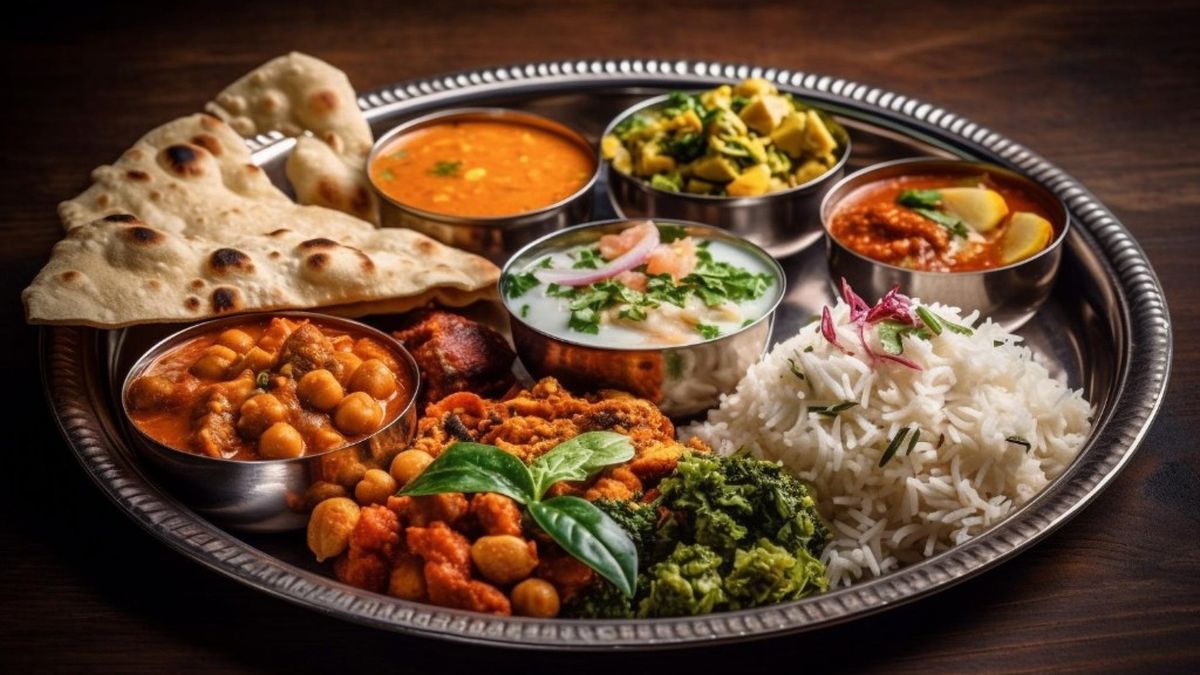
Every Indian household with a diabetes diagnosis eventually has the same argument at the dining table: chawal chhod do versus chawal toh chalega. Glycemic index is the tool that settles it — but only if you use it properly, which almost nobody does, because GI is measured on foods eaten alone and nobody in India eats rice alone.
So this table has a fourth column that most GI tables skip: what to put next to the food.
GI kya hai — aur GL kya hai
Diabetes UK defines the glycemic index as a ranking from 0 to 100 of how quickly a carbohydrate-containing food or drink raises your blood sugar after you eat it. The three bands are:
- Low — 55 or below. Raises blood sugar slowly. Beans, peas, lentils, most whole fruit, unsweetened milk and yoghurt, coarse oatmeal.
- Medium — 56 to 69. Basmati rice, chapatti, sweet potato, new potatoes, plain popcorn, overripe bananas.
- High — 70 or more. White bread, regular potatoes however you cook them, bakery items, sugar-sweetened drinks, some sweetened breakfast cereals, watermelon.
The important companion number is glycemic load, which combines the GI rating with how much carbohydrate is actually in your portion. Diabetes UK puts it bluntly: the amount of carbohydrate you eat has a bigger effect on your blood sugar than GI alone. Their example is neat — pasta has a lower GI than watermelon, but because pasta carries far more carbohydrate per serving, an equal weight of pasta will move your sugar more.
Translated to an Indian plate: two katoris of "low-GI" brown rice will do more to your glucose than one katori of "high-GI" white rice. Portion first, GI second.
50 Indian foods ki GI table
Please read this before using the numbers. GI values are measured in laboratory conditions on single foods, and they vary genuinely — by variety, by milling, by how long you cook something, and by how ripe it is. The figures below are indicative ranges based on published GI classifications rather than exact values for the specific dal in your kitchen. Treat the band (low / medium / high) as the reliable part and the number as a guide. For exact tested values, search the University of Sydney's GI database, linked in Sources.
Anaaj, roti aur breakfast staples
| Food | Approx. GI | Band | Isske saath kya khaayein |
|---|---|---|---|
| White rice, polished, boiled | ~70–80 | High | One katori only, with a thick dal, a sabzi and dahi |
| Basmati rice, white | ~56–69 | Medium | Rajma or chole — the beans pull the whole meal down a band |
| Brown rice | ~55–70 | Medium | Same portion rules as white; the fibre helps a little, not hugely |
| Parboiled rice (sela, ukda) | ~50–65 | Low–Medium | Sambar plus a dry vegetable poriyal |
| Whole-wheat chapati / roti | ~56–69 | Medium | Dal and sabzi; a smear of ghee slows digestion further |
| Maida paratha, pav, white bread | ~70+ | High | Best swapped; if not, pair with paneer bhurji and a salad |
| Bajra roti | ~55–70 | Medium | Dahi and sarson ka saag — a genuinely good winter combination |
| Jowar roti / bhakri | ~55–70 | Medium | Thick dal and a dry sabzi with peanuts |
| Ragi roti or mudde | ~55–70 | Medium | Sambar or a vegetable kootu |
| Foxtail / little millet (kangni, samai) | ~50–65 | Low–Medium | Cook as a savoury upma with vegetables and peanuts |
| Barley (jau), cooked | ~25–40 | Low | As a savoury dalia with vegetables and a katori of dahi |
| Broken wheat / dalia | ~50–65 | Low–Medium | Cook with moong dal and vegetables, not with sugar and milk |
| Steel-cut or coarse oats | ~55 or below | Low | Milk, a spoon of seeds, a few nuts — no added sugar |
| Instant "masala" oats sachets | ~65–80 | Medium–High | Rescue it with sprouts, dahi or an egg; check the salt on the pack |
| Idli | ~65–80 | Medium–High | Two or three with sambar — the dal in sambar is the point, not the chutney |
| Plain dosa | ~65–80 | Medium–High | Sambar plus a vegetable side; avoid making it a three-dosa meal |
| Poha | ~65–80 | Medium–High | Peanuts, peas, sprouts and an egg or a katori of dahi |
| Rava (sooji) upma | ~65–80 | Medium–High | Load it with vegetables and add dahi on the side |
| Sabudana khichdi | ~70+ | High | Peanuts and dahi help; treat it as an occasional or fasting food |
| Murmura / puffed rice | ~70+ | High | Only as bhel, loaded with onion, tomato, sprouts and lemon |
Dal, chana aur legumes
This is the good news section. Diabetes UK lists beans, peas and lentils as low-GI foods across the board, and their own practical tip for South Asian readers is literally to eat wholemeal chapatti and include dhal in meals.
| Food | Approx. GI | Band | Isske saath kya khaayein |
|---|---|---|---|
| Chana dal | ~30–45 | Low | Use it as the protein anchor with rice or roti |
| Kala chana, boiled | ~25–40 | Low | As a salad with onion, tomato and lemon for an evening snack |
| Kabuli chana / chole | ~25–40 | Low | With one or two rotis instead of three bhature |
| Rajma | ~25–40 | Low | The classic rajma-chawal works — keep the rice to one katori |
| Masoor dal | ~25–45 | Low | Cook it thick; a watery dal is mostly water |
| Moong dal | ~30–45 | Low | Moong dal khichdi with vegetables is an excellent recovery meal |
| Toor / arhar dal | ~30–45 | Low | One full katori per meal, not a ladle over rice |
| Lobia (black-eyed peas) | ~35–50 | Low | As a curry with jowar or bajra roti |
| Sprouted moong | ~25–40 | Low | Raw with lemon, or steamed into a chaat with onion |
| Besan chilla | ~30–50 | Low | Stuff it with grated vegetables and eat with mint chutney |
Doodh, dahi aur paneer
| Food | Approx. GI | Band | Isske saath kya khaayein |
|---|---|---|---|
| Dahi, plain set curd | ~15–35 | Low | With any rice or roti meal — it is the easiest single upgrade |
| Toned milk, unsweetened | ~25–40 | Low | With oats or dalia; low GI because of its protein and fat |
| Chaas / buttermilk, unsweetened | Low | Low | After lunch instead of a sweet lassi |
| Paneer | Negligible carbohydrate | Low | Add it to a carb-heavy meal to slow the whole thing down |
| Sweetened flavoured yoghurt, mishti doi | ~55–70 | Medium–High | Plain dahi with fruit gives you the same thing without free sugars |
Sabzi aur tubers
| Food | Approx. GI | Band | Isske saath kya khaayein |
|---|---|---|---|
| Potato, boiled or mashed | ~70+ | High | Count it as your carbohydrate, not as your sabzi |
| Sweet potato / shakarkandi, boiled | ~55–70 | Medium | With lemon, chaat masala and a handful of peanuts |
| Arbi / colocasia | ~55–70 | Medium | Same rule as potato — it replaces rice, it does not accompany it |
| Green peas (matar) | ~35–50 | Low | Fold them into poha, upma and pulao to raise fibre |
| Carrot (gajar), boiled | ~35–50 | Low | Freely, in sabzi or salad; gajar ka halwa is a different question |
| Non-starchy sabzi — lauki, bhindi, baingan, palak, gobhi | Negligible | Low | Half your plate. This is the ICMR-NIN recommendation, not ours |
Phal, gud aur meethe
| Food | Approx. GI | Band | Isske saath kya khaayein |
|---|---|---|---|
| Guava (amrood) | ~30–45 | Low | Whole, with the skin and seeds — among the best Indian fruit choices |
| Apple or pear | ~35–45 | Low | Whole with skin; a few walnuts alongside if it is a snack |
| Orange or mosambi | ~35–50 | Low | Eat the segments, not the juice |
| Banana, just-ripe | ~50–65 | Medium | Half a banana with peanut butter or curd; overripe bananas rank higher |
| Mango, ripe | ~50–65 | Medium | One small mango as your only carbohydrate at that meal |
| Papaya | ~55–70 | Medium | A small bowl with a few seeds or nuts, not a full plate |
| Chikoo / sapota | ~55–75 | Medium–High | One, occasionally — it is one of our sweetest fruits |
| Watermelon (tarbooz) | ~72+ | High | High GI but low carbohydrate per slice — a small portion is fine |
| Jaggery (gud), sugar, honey | High | High | Gud is not a diabetic sugar. WHO counts all of these as free sugars |
Pairing ka jaadu: akela food kabhi nahi khaate
This is the section that actually changes blood sugar readings. Diabetes UK is explicit that the GI value relates to a food eaten on its own, and that combining foods with different GIs alters the overall GI of a meal. Three nutrients do the work:
- Fibre acts as a physical barrier that slows carbohydrate absorption. Note their careful distinction: wholegrain (the grain left whole) is not the same as wholemeal (the whole grain ground up). A mixed-grain bread with visible whole grains can have a lower GI than a wholemeal one.
- Fat lowers GI. This is why crisps rank lower than plain boiled potato — and why the ghee on your roti is doing something useful, within the 25–30 g daily oil-and-fat limit ICMR-NIN sets for an adult.
- Protein lowers GI. Milk and dairy rank low largely because of their protein and fat. This is the single most actionable fact in this article for Indian eaters.
So the practical instruction is not "don't eat rice". It is: never let a carbohydrate travel alone. Rice needs dal. Roti needs sabzi and dal. Poha needs peanuts and sprouts. Idli needs sambar. Fruit, if it is a snack, needs a few nuts.
Cooking, cooling aur ripeness — teen cheezein jo GI badal deti hain
Diabetes UK lists three factors that can make the GI of a single food vary significantly: cooking method (frying, boiling, baking), processing (milling, pureeing) and the ripeness or variety of fruit and vegetables. In Indian terms:
- Milling is the big one. The difference between polished white rice and parboiled or unpolished rice, or between maida and atta, is largely a milling difference. ICMR-NIN groups all highly polished rice, maida and polished millets together, and asks that at least half your cereal intake be whole grain.
- Overcooking raises GI. A soft, mushy khichdi will behave differently from a firm one, in the same way Diabetes UK recommends wholewheat pasta cooked al dente. Cook grains until done, not until they collapse.
- Ripeness matters. An overripe banana ranks in the medium band where a just-ripe one sits lower. Same fruit, different day, different number.
- Cooling cooked starch appears to change its structure in ways that can blunt the glucose response — which is the usual explanation offered for why leftover rice behaves a little differently from fresh. The reported effect is modest and varies between studies, so treat it as a small bonus rather than a strategy.
GI ki limits — jahan yeh list kaam nahi karti
An honest GI article has to include this section. Diabetes UK's own caveats:
- GI is measured on the amount of a food containing 50 g of carbohydrate — which is not how anyone eats. A GI number attached to "watermelon" tells you nothing about the slice you actually ate.
- Not all low-GI foods are healthy. Most chocolate has a low GI because of its fat content.
- Not all high-GI foods are unhealthy. A baked potato is high GI but carries fibre and nutrients, especially in the skin.
- Focusing only on GI can leave your diet unbalanced and high in fat and calories, which makes blood sugar harder to manage, not easier.
ICMR-NIN adds the mechanism worth remembering: foods containing sugar or refined carbohydrates have a high GI, promote rapid glucose absorption and raise glycemic load, producing a sharp insulin rise — and regular intake of high-sugar foods at frequent intervals is the pattern that causes trouble. It is the frequency and the refinement, not one bowl of rice.
Practical plate: teen Indian meals, thoda badle hue
Nothing exotic. Same food, better arithmetic.
- Breakfast. Instead of a plate of poha alone: the same poha with a fistful of peanuts, a handful of peas and sprouts stirred in, plus a boiled egg or a small katori of dahi. Same taste, three GI-lowering additions.
- Lunch. Instead of two katoris of rice with a ladle of thin dal: one katori of rice, one full katori of thick dal, one katori of sabzi, salad, and dahi. You have not reduced the volume of the meal, only its carbohydrate share — which is exactly the ICMR-NIN "My Plate" shift, where vegetables and fruit take about half the plate and cereals are capped near 45% of energy.
- Dinner. Two jowar or bajra rotis with a vegetable sabzi, a katori of rajma or chole, and a bowl of dahi. This lands in the medium band on the cereal and the low band on everything else.
And if you are on insulin or a sulfonylurea, changing carbohydrate portions can change your medication needs. That is a conversation to have with your doctor before you change anything, not after.
Yeh medical advice nahi hai. Glycemic index is an educational tool, not a treatment plan, and the values here are indicative ranges rather than tested figures for your specific foods. Diabetes medication doses are set by your doctor. Do not reduce or stop any medicine because you changed your diet, and speak to a clinician before making significant changes if you use insulin or any glucose-lowering drug.
Aksar poochhe jaane wale sawaal
Chawal ki GI roti se zyada kyun hoti hai?
Polished white rice is milled starch with very little intact structure left, so digestive enzymes reach it fast. Whole-wheat chapati keeps more of the bran and is usually eaten with ghee and dal, both of which slow digestion further. Diabetes UK classifies chapatti as a medium-GI food and refined white breads as high.
Kya low-GI khaane se HbA1c kam hota hai?
Diabetes UK states that research has shown choosing low-GI foods can particularly help manage long-term blood glucose, measured as HbA1c, in people with type 2 diabetes. It is one useful tool among several — carbohydrate portion size still has a bigger effect on blood sugar than GI alone.
Kya saare low-GI foods healthy hote hain?
No. Diabetes UK points out that most chocolates have a low GI purely because of their fat content, while a baked potato has a high GI but carries useful fibre and nutrients, especially in the skin. GI describes one property of a food, not its overall quality.
Idli aur dosa diabetes mein kha sakte hain?
Yes, with attention to what goes alongside. Both are rice-and-urad based and sit in the medium-to-high band on their own. Eat two or three rather than five, always take the sambar rather than only chutney, and add a vegetable or a katori of dahi to the plate.
Sources
- Diabetes UK — Glycaemic index and diabetes — the source for the 0–100 scale, the low / medium / high bands, the classification of chapatti and basmati rice as medium, the role of fibre, fat and protein, the glycemic load explanation and the limitations of GI.
- University of Sydney — Glycemic Index Research and GI News (international GI database) — the reference database to look up tested GI values for individual foods.
- ICMR-NIN — Dietary Guidelines for Indians, 2024 — the My Plate for the Day model, the 45% cereal energy cap, the "at least half your cereal as whole grain" recommendation, the 25–30 g daily oil limit and the mechanism linking refined carbohydrate to glycemic load.
- ICMR-NIN — Indian Food Composition Tables (IFCT 2017) — the reference for the carbohydrate content of Indian foods, which is what you need for portion and glycemic-load thinking.
- WHO — Diabetes fact sheet — global diabetes figures and the core prevention advice, including at least 150 minutes of moderate exercise a week.
- NHS — Type 2 diabetes — symptoms, diagnosis, monitoring and treatment overview.
- WHO — Healthy diet fact sheet — the definition of free sugars, which is why jaggery and honey are counted alongside sugar.
Related reads — aage kya padhein
- Start at the top: our full Diabetes hub — monitoring, medication basics and what daily coaching looks like.
- The Oats Question: Blood Sugar, Cholesterol and How Much Actually Helps — the one low-GI breakfast grain that has a real dose attached to it.
- Why Indian Diets Don't Need to Become Western to Work — the plate-ratio maths behind the "portion first, GI second" rule.
- Related hubs: Weight Management and PCOS — both share the insulin-resistance thread that makes GI worth understanding.