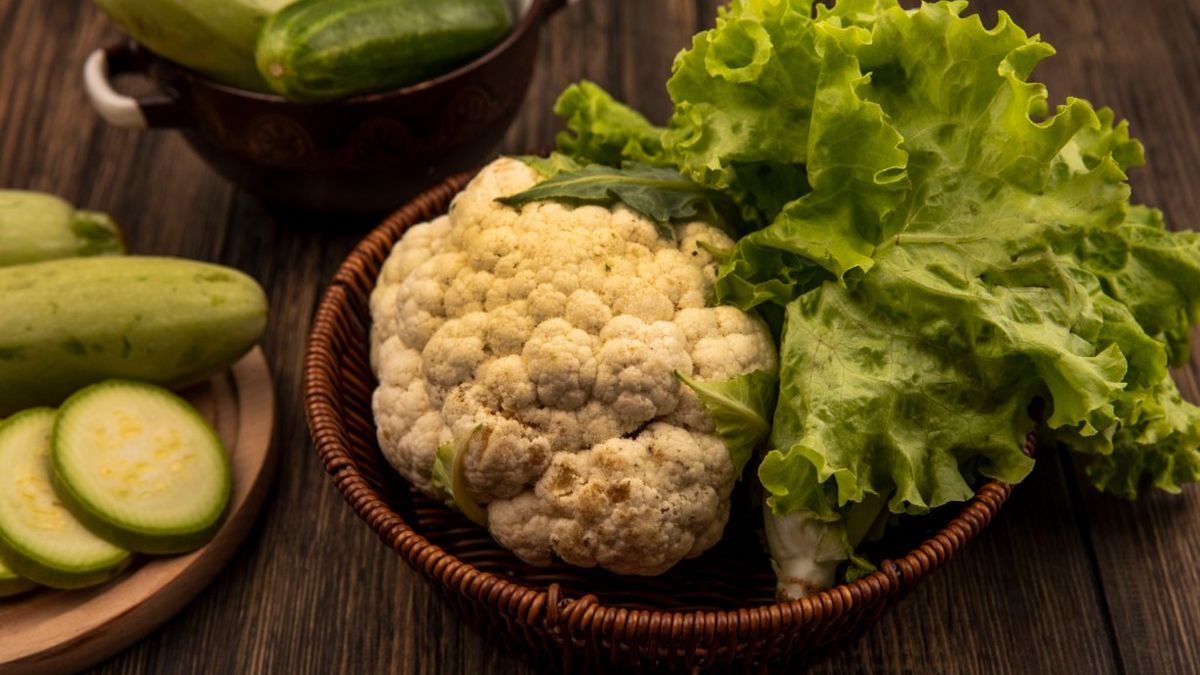
Search "thyroid diet India" and within three results somebody will tell you to stop eating cauliflower, cabbage, soya, mustard greens and — increasingly — millets. For a country where sarson ka saag is a winter ritual and gobhi is in half the sabzi rotation, that advice removes a great deal of good food to solve a problem most readers do not have.
The goitrogen story is real. It is just conditional, and almost everyone quotes it without the condition.
Goitrogen kya hai — mechanism seedha samjhiye
Your thyroid needs iodine to make thyroid hormones — the NHS puts it simply: iodine helps make thyroid hormones, which keep your cells and metabolic rate healthy. A goitrogen is any substance that interferes with that process.
There are three broad mechanisms in the published literature, and they matter because they behave differently:
- Thiocyanate competition. Cassava, lima beans, linseed, sorghum and sweet potato contain cyanogenic glucosides, which are metabolised to thiocyanates that compete with iodine for uptake by the thyroid.
- Glucosinolate competition. Cruciferous vegetables — cabbage, kale, cauliflower, broccoli, turnips and rapeseed — contain glucosinolates whose metabolites also compete with iodine for thyroidal uptake.
- Enzyme inhibition. Soy and millet contain flavonoids that impair thyroid peroxidase activity, the enzyme that builds thyroid hormone.
Now the sentence that should headline every article on this subject. The NIH Office of Dietary Supplements states that these issues "are of concern primarily for people living in areas prone to iodine deficiency", and that for most people who have adequate iodine intakes and eat a variety of foods, "the consumption of reasonable amounts of foods containing goitrogens is not a concern."
Published reviews of iodine deficiency put the same point mechanistically: all of these substances interfere with the accumulation of iodide in the thyroid, an effect that can usually be overcome by increasing iodine intake. Goitrogens do not damage your thyroid. They compete for iodine — and competition is only a problem when supply is short.
Indian kitchen mein goitrogens kahan hain
Here is the honest map, with the practical instruction in the last column. Notice that none of them say "stop".
| Indian food | Compound | How it interferes | What to actually do |
|---|---|---|---|
| Patta gobhi, phool gobhi, broccoli, shalgam, knol-khol | Glucosinolates | Metabolites compete with iodine for thyroid uptake | Keep eating them cooked; secure your iodine intake instead |
| Sarson ka saag, mooli ke patte, rai (mustard family) | Glucosinolates (rapeseed group) | Same competition mechanism | Seasonal and nutrient-dense — no reason to drop it |
| Soya chunks, tofu, soy milk, soya atta | Isoflavones / flavonoids | Impair thyroid peroxidase activity | Reasonable portions are fine with adequate iodine. Do not take it with your levothyroxine dose |
| Bajra, ragi, jowar and other millets | Flavonoids; sorghum also carries cyanogenic glucosides | Enzyme inhibition and thiocyanate competition | ICMR-NIN actively recommends millets for Indians. Keep them; fix iodine |
| Sabudana, tapioca (cassava) | Cyanogenic glucosides | Metabolised to thiocyanate, which competes with iodine | Properly processed sabudana in occasional portions. Cassava is the classic problem food only where it is a poorly processed staple |
| Shakarkandi (sweet potato) | Cyanogenic glucosides | Same thiocyanate route | Normal portions are not a concern |
| Alsi (linseed / flaxseed), sem and lima beans | Cyanogenic glucosides | Same thiocyanate route | A spoon of alsi a day is fine; do not make it a large daily bulk food |
| Iron deficiency | Nutrient, not a food | Reduces heme-dependent thyroperoxidase activity and may blunt the effect of iodine | Test haemoglobin and ferritin. In India this is the one most likely to apply to you |
| Vitamin A deficiency | Nutrient, not a food | Increases TSH stimulation and goitre risk | Green leafy vegetables, carrots, milk, eggs |
| Selenium deficiency | Nutrient, not a food | Impairs deiodinase function and thyroid protection from peroxides | Do not supplement blind. Discuss testing with your doctor |
The last three rows are the ones Indian thyroid content almost never mentions, and they are arguably more relevant here than cabbage. The NIH fact sheet notes that deficiencies of iron and/or vitamin A may themselves be goitrogenic.
Asli sawaal: aapka iodine kitna hai
If the goitrogen question is conditional on iodine, then iodine is the question worth answering.
How much you need. The NHS states that adults need 140 micrograms of iodine a day and that most people can get all they need from a varied, balanced diet. The US recommended dietary allowance is 150 micrograms for adults, rising to 220 micrograms in pregnancy and 290 micrograms while breastfeeding.
Where it comes from. The NHS lists cows' milk and dairy products, eggs, sea fish and shellfish as good sources, and notes that iodine in plant foods such as cereals and grains varies depending on how much iodine is in the soil where the plant was grown.
That last clause is the India-specific problem. Reviews of iodine deficiency identify the mountainous regions of the northern Indian subcontinent and the Ganges Valley among the world's classically iodine-deficient soils, because glaciation and heavy rainfall leached iodine out of them. The same literature records that in the most severely deficient environments of northern India, more than half the population had urinary iodine levels below 25 micrograms per gram of creatinine, with dramatically higher rates of neonatal hypothyroidism than in Delhi, where deficiency was mild. India's universal salt iodisation programme exists precisely because of this geography.
Which gives you the single most useful action in this article:
- Use iodised salt, and check the packet actually says so. Fancy rock salt, sendha namak, black salt and most sea salts are not reliably iodised — the NIH fact sheet explicitly lists non-iodised salt, including many sea salts, among foods relatively low in iodine.
- Store it sensibly and add it at the end. Reviews of iodised salt note that boiling, baking and canning of foods containing iodised salt cause only small losses, so ordinary Indian cooking is not destroying it — but a dry, closed container away from heat is still the right way to keep it.
- Do not exceed 5 g of salt a day. WHO and ICMR-NIN both set this limit — about one teaspoon, or 2 g of sodium. Iodised salt is the vehicle for iodine, not a licence to use more salt.
- If you eat no dairy, eggs or fish, look at this properly. The NHS specifically flags strict vegans, and notes some plant-based drinks such as soya and oat are fortified with iodine — check the label.
- Do not megadose. The NHS warns that taking high doses of iodine for long periods could change the way your thyroid gland works, and that 0.5 mg a day or less from supplements is unlikely to cause harm. More iodine is not better.
Pakane se kya hota hai
Indian cooking already does a lot of the work here, and this is worth knowing because it explains why the goitrogen panic is largely a raw-food-culture concern.
- We rarely eat cruciferous vegetables raw. Gobhi is boiled, sautéed or curried; saag is slow-cooked. The population studies that produced the goitrogen literature involved raw or poorly processed staples eaten in very large quantities under iodine-deficient conditions — not a katori of gobhi ki sabzi.
- Cassava is the exception that proves the rule. It became a goitre problem in regions where it was the dominant staple and was inadequately processed. Sabudana khichdi on a fasting day is not the same exposure.
- Iodised salt survives normal cooking. Only small losses from boiling and baking, per published analyses of iodised salt stability.
If you want a rule of thumb: eat your crucifers cooked, vary your vegetables rather than eating a kilo of one thing, and stop worrying about it.
Levothyroxine, khana aur timing
For most Indians with hypothyroidism, this section will do more for their TSH than every goitrogen decision combined. The NHS notes that an underactive thyroid is usually treated with levothyroxine, taken long term, with regular blood tests to check the dose.
NHS instructions for taking it:
- Take it on an empty stomach, 30 to 60 minutes before your first meal of the day, before any drink with caffeine such as tea or coffee, and before any other medicine.
- Try to take it at the same time each day, swallowed whole with a glass of water.
The "before your chai" part is the one that gets broken in every Indian household. Bed-tea and levothyroxine at the same moment is a very common, very fixable mistake.
The NHS also lists things that can interfere with levothyroxine, including antacids and other indigestion treatments, omeprazole, calcium and iron supplements, beta blockers, digoxin, sertraline, semaglutide, St John's wort — and biotin (vitamin B7), which can affect your thyroid test results rather than the drug itself. Tell your doctor about every supplement you take, including the ones you think are harmless.
And two more things the NHS flags: iodine deficiency is a rare cause of hypothyroidism in the UK — but the soil story above means it cannot be dismissed as casually in India — and if you are pregnant or planning pregnancy, tell your doctor, because your levothyroxine dose will likely need to change.
Yeh medical advice nahi hai. Thyroid disease is diagnosed and treated by a doctor on the basis of blood tests, and levothyroxine dosing is individual. Never change or stop a thyroid medicine because of a diet article, and never start an iodine or selenium supplement for a thyroid condition without medical advice — too much iodine can itself disturb thyroid function. If you are pregnant or planning to be, speak to your doctor about your dose and your iodine intake.
Aksar poochhe jaane wale sawaal
Kya thyroid mein gobhi aur patta gobhi band karni padti hai?
For most people, no. The NIH Office of Dietary Supplements states that goitrogens are of concern primarily for people living in areas prone to iodine deficiency, and that for people with adequate iodine intakes who eat a variety of foods, consuming reasonable amounts of goitrogen-containing foods is not a concern. Use iodised salt and keep eating your sabzi.
Roz kitna iodine chahiye hota hai?
The NHS says adults need 140 micrograms of iodine a day. The US recommended dietary allowance is 150 micrograms for adults, rising to 220 micrograms in pregnancy and 290 micrograms while breastfeeding. Iodised salt, milk and curd, eggs and sea fish are the main dietary sources.
Kya bajra aur ragi thyroid ke liye kharab hain?
Millets are listed among foods with goitrogenic compounds, and sorghum (jowar) carries cyanogenic glucosides. But the interference is with thyroid iodide uptake, and published reviews note this effect can usually be overcome by increasing iodine intake. Millets are also a core ICMR-NIN recommendation for Indians. Keep them and secure your iodine instead.
Levothyroxine chai ke saath le sakte hain?
No. The NHS advises taking levothyroxine on an empty stomach 30 to 60 minutes before your first meal of the day, before any caffeinated drink such as tea or coffee, and before any other medicine. Calcium and iron supplements and antacids also interfere, so space those out too.
Sources
- NIH Office of Dietary Supplements — Iodine: Fact Sheet for Health Professionals — the source for the goitrogen food list, the "of concern primarily in iodine-deficient areas" framing, the iron and vitamin A note, the recommended dietary allowances and the point that non-iodised and many sea salts are low in iodine.
- The Iodine Deficiency Disorders — Endotext, NCBI Bookshelf — the mechanism table (cyanogenic glucosides, glucosinolates, flavonoids), the note that the effect can usually be overcome by increasing iodine intake, the iodine-deficient geography of the northern Indian subcontinent and Ganges Valley, and the stability of iodised salt during cooking.
- NHS — Vitamins and minerals: Iodine — the 140 microgram adult requirement, food sources, the soil-variability point, vegan guidance and the warning on high-dose supplements.
- NHS — Underactive thyroid (hypothyroidism) — causes, long-term levothyroxine treatment, monitoring blood tests and pregnancy dose review.
- NHS — Levothyroxine — the empty-stomach 30-to-60-minute rule, the caffeine timing instruction and the list of interacting medicines and supplements including biotin.
- ICMR-NIN — Dietary Guidelines for Indians, 2024 — the recommendation to use iodised salt, the 5 g daily salt limit and the recommendation to diversify staples with millets.
- NHS — Overactive thyroid (hyperthyroidism) — for readers whose problem is the opposite one, where iodine advice differs.
Related reads — aage kya padhein
- Start at the top: our full Thyroid hub — TSH, T3, T4, symptoms and what thyroid coaching covers.
- Why Indian Diets Don't Need to Become Western to Work — useful if your thyroid diagnosis came with unexplained weight change.
- Related hub: Weight Management — unexplained weight change is one of the symptoms that most often brings people to a thyroid test.