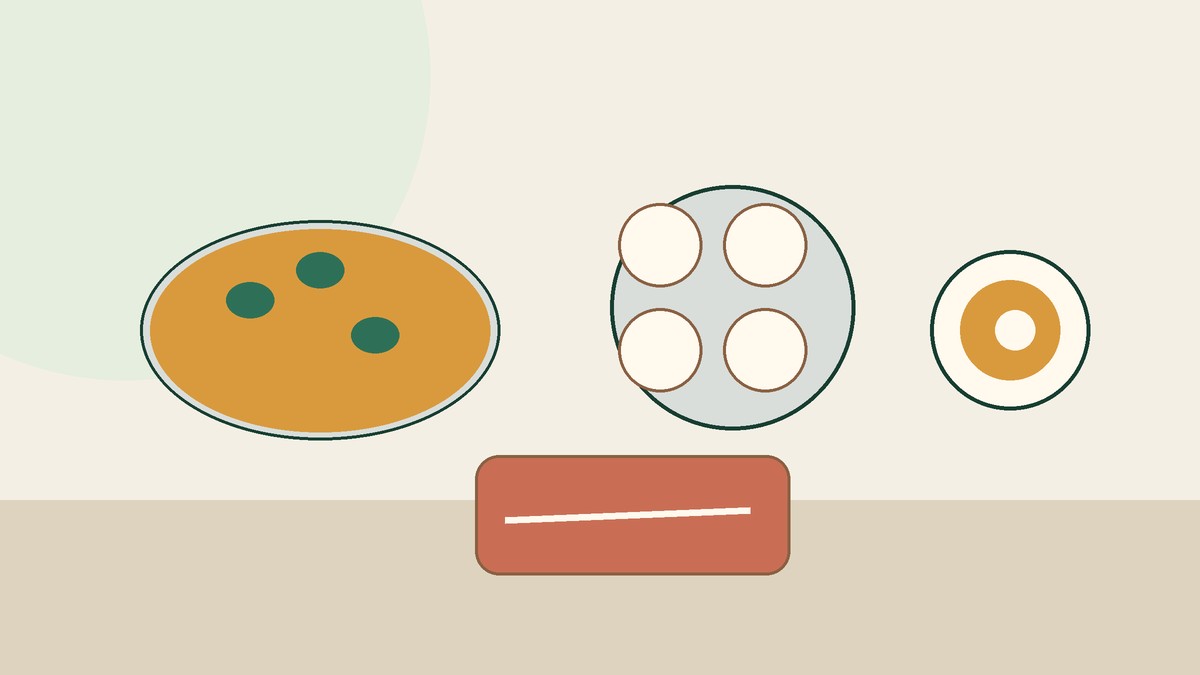
An Indian breakfast for weight loss does not need a special cereal, shake or imported ingredient. Poha, idli, chilla, paratha, dalia and eggs can all fit when the portion is measured and the meal includes protein and fibre. The important correction is that breakfast is optional: eating it does not cause weight loss by itself.
For body mass index (BMI), waist, tests and treatment, see our weight management guide for Indians. For the whole day’s plate, use our Indian diet plan for weight loss.
Does breakfast itself help with weight loss?
What the trials found
A 2019 British Medical Journal (BMJ) systematic review found 13 randomised trials that compared eating breakfast with skipping it. It found no evidence that adding breakfast promotes weight loss. People assigned to breakfast ate about 260 kcal more over the day on average, but results varied greatly between trials. The studies were short, mostly low quality and conducted in high-income countries, so they do not prove that skipping breakfast is a weight-loss treatment either.
The useful conclusion is modest: do not start breakfast only because someone calls it the “most important meal”, and do not skip it only because someone promises faster fat loss. Total food, portions, movement, sleep, medicines and what you can sustain matter more.
When breakfast is still useful
Breakfast can be practical if you wake hungry, exercise in the morning, have a long gap before lunch or tend to buy biscuits and fried snacks by 11 AM. It can also carry protein and vegetables that your later meals lack. If you are not hungry and take no meal-linked medicine, timing can be flexible. If you take insulin or a sulfonylurea, changing or skipping the morning meal can cause low blood sugar; speak to your doctor first.
The formula for a healthy Indian breakfast
Build the meal from three parts instead of judging one dish as “good” or “bad”. Indian Council of Medical Research–National Institute of Nutrition (ICMR-NIN) describes a healthy meal as vegetables, appropriate whole grains and pulses or beans, with minimal added sugar, oil and salt.
Choose one high-protein Indian breakfast anchor
Use besan, moong, sambar dal, sprouts, dahi, paneer, eggs, milk, roasted chana or peanuts. A high-protein Indian breakfast does not need powder. Indian Food Composition Tables (IFCT) give raw-food values: chana dal has about 21.6 g protein per 100 g, whole moong 22.5 g, paneer 18.9 g and peanuts 23.7 g. The amount in a cooked serving is lower because it contains water and uses less than 100 g raw food.
Add vegetables, fruit or another fibre source
Add onion, tomato, peas, carrot, spinach, methi, capsicum or leftover vegetables to the cooked dish. A whole fruit can sit beside a simpler breakfast. Juice is not equivalent: ICMR-NIN prefers fresh fruit to juice, and vegetables add volume without turning breakfast into another grain-heavy meal.
Keep the starch measured
Poha, rava, rice batter, dalia, oats, bread and atta all contribute starch. As a practical starting example—not an official serving rule—use about 1 medium 200 ml katori of cooked poha, upma or dalia; 2–3 idlis; 2 chillas; or 1–2 medium rotis or parathas. Add protein and vegetables before adding a second starch portion.
Indian breakfast for weight loss: 12 practical ideas
The portions below are starting examples for adults, not a universal calorie prescription. Cooking oil, recipe size, activity and hunger change what fits. “Quick” means the base was prepared earlier, not that packaged breakfast food is required.
| Breakfast | Practical portion | Protein pairing | Vegetable or fibre addition | Prep note |
|---|---|---|---|---|
| Vegetable poha | 1 medium katori cooked | 1 small katori dahi, 1 egg, or a spoon of peanuts | Peas, onion, carrot; fruit on the side if vegetables are sparse | Chop vegetables the night before |
| Idli-sambar | 2–3 idlis | 1 large katori thick vegetable sambar | Vegetables in sambar; keep chutney to 1–2 tablespoons | Fermented batter can serve more than one meal |
| Besan chilla | 2 medium chillas from about 40 g besan | 1 small katori dahi | Onion, tomato, spinach or grated lauki in batter | Keep a dry spice-and-besan mix ready |
| Moong chilla or pesarattu | 2 medium | Moong is the anchor; add dahi or a little paneer if needed | Onion, coriander, ginger and a vegetable filling | Soak and grind batter in advance |
| Vegetable dalia | 1 medium katori cooked | Add moong dal or serve with dahi | Use at least as much vegetable volume as dry dalia | Cook a savoury base, then refresh with vegetables |
| Vegetable upma | 1 medium katori cooked | Roasted chana dal, peanuts, dahi or an egg | Peas, beans, carrot and onion | Dry-roast rava ahead; measure oil |
| Stuffed paratha | 1–2 medium, lightly oiled | Paneer, dal or dahi | Methi, gobhi, mooli or mixed vegetable stuffing | No butter on top; aloo is another starch, not the protein |
| Egg bhurji | 2 eggs with 1 medium roti | Eggs | Onion, tomato, capsicum and spinach | Cook in a measured film of oil |
| Sprout chaat | 1 medium katori | Whole moong or kala chana sprouts plus dahi | Tomato, cucumber, onion and lemon | Steam sprouts if raw sprouts do not suit you |
| Dhokla plate | 3–4 small pieces | Dahi or a small katori of sprouts | Cucumber, tomato or a fruit | Use light tempering; sweet syrup changes the meal |
| Ragi dosa | 2 small dosas | 1 large katori sambar | Vegetables in sambar or a vegetable filling | Ragi is still the grain part, not unlimited |
| Savoury oats | 1 medium katori cooked | Moong, dahi, egg or peanuts | Mixed vegetables | Use plain oats; see the dedicated oats guide for cholesterol claims |
No row is a “fat-burning” breakfast. The useful change is the structure: a measured grain dish, a visible protein anchor and vegetables or fruit, cooked with limited oil and added sugar.
Quick breakfast for weight loss on busy mornings
Five-minute options
- 1 katori dahi, 1 whole fruit and a small fistful of roasted chana.
- 2 boiled eggs, 1 roti and sliced cucumber or tomato.
- Leftover thick dal spread inside 1–2 phulkas with vegetables.
- Paneer bhurji prepared earlier, reheated with 1 roti.
The speed comes from preparation. Boil eggs, set dahi, wash fruit, portion roasted chana and keep batter ready. Packaged cereal is not automatically faster once you count shopping and label reading.
Breakfasts that travel
Pack 2 dry chillas with dahi in a separate chilled container, an egg-and-vegetable roti roll, or a box of sprout chaat with lemon added at eating time. Keep perishable food cold and do not leave egg, paneer or dahi sitting warm for hours. Sweet tea plus biscuits may travel easily, but it provides little protein or produce and is easy to eat without noticing the portion.
How to adjust breakfast portions
If lunch is late or you are active
Add protein first: another egg, a little more thick dal, dahi or paneer. Add part of a grain portion if you do physical work, train in the morning or have a long gap to lunch. The goal is a breakfast that lasts, not the smallest plate possible.
If breakfast leaves you hungry
Check whether it was mostly starch: plain poha, 4 idlis with little sambar, bread and jam, or paratha without a protein side. Reduce the grain slightly only after adding protein and vegetables. Persistent hunger, weakness or dizziness means the overall plan needs review. Use our calorie counter for Indian household servings only for estimates, not a personal target.
Can you skip breakfast to lose weight?
You can choose a later first meal if it suits your hunger, routine and medicines, but the evidence does not make skipping a special treatment. The BMJ review was too short and uncertain to prescribe breakfast skipping. If skipping makes you over-hungry and leads to a large lunch, evening snacking or poor concentration, it is not helping your routine.
Do not skip or sharply delay breakfast without medical advice if you use insulin or sulfonylureas. The Indian Council of Medical Research (ICMR) diabetes guideline describes hypoglycaemia as the commonest side effect of sulfonylureas and links both those medicines and insulin to meals. Pregnancy, an eating-disorder history, frailty and unintentional weight loss also need individual advice.
When to see a doctor
See the weight-management hub’s full warning-sign list.
Emergency: get help now
- Someone with suspected low blood sugar is confused, cannot swallow safely, has a seizure or is unconscious.
- Chest pain, severe breathlessness or fainting.
Prompt review: the same day
- Shaking, sweating, sudden hunger or confusion after delaying breakfast while taking diabetes medicine.
- Repeated vomiting, inability to keep fluids down or repeated very high or low glucose readings.
Routine review
- You plan to skip breakfast while using insulin or a sulfonylurea.
- You are pregnant, breastfeeding, have kidney disease, are losing weight without trying or have an eating-disorder history.
How Disha can help
Disha is an AI health coach that chats and calls in Hindi, English and Hinglish. It can help you start from the breakfast already in your kitchen, add a protein pairing and plan quick options for workdays. It does not diagnose, prescribe, change medicine doses or provide emergency care, and it does not replace your doctor or dietitian. Read how Disha coaching works.
This is not medical advice. This page is general education for adults (18+) and gives no personal calorie target. If you use insulin or sugar-lowering tablets, do not change breakfast timing or medicine doses without your doctor. In an emergency, call 112.
Frequently asked questions
What is the best Indian breakfast for weight loss?
There is no single best dish. Choose a breakfast you can repeat that has a clear protein anchor, vegetables or fruit, and a measured grain portion. Besan chilla with dahi, idli with plenty of sambar, vegetable poha with egg or dahi, and egg bhurji with roti all fit. Cooking oil and extras still matter.
Is poha good for weight loss?
It can fit, but plain poha is mostly starch. Start with about 1 medium katori cooked, add peas and other vegetables, include peanuts in a measured spoon, and pair it with dahi or an egg. A large plate cooked in generous oil with sev on top is a different meal despite having the same name.
Is idli good for weight loss?
Idli can fit because it is steamed, but the useful meal is idli with dal-rich vegetable sambar. A practical starting point is 2–3 idlis with 1 large katori of sambar and 1–2 tablespoons of chutney. Six idlis with little sambar is grain-heavy; large amounts of coconut chutney also add substantial fat.
Are parathas allowed during weight loss?
Yes. Keep the portion to about 1–2 medium parathas, use a light film of oil rather than ghee, and choose methi, gobhi, paneer or dal stuffing with dahi. An aloo paratha is grain plus potato, so it still needs protein and vegetables. Butter on top and repeated refills change the meal most.
Can I skip breakfast to lose weight?
You may choose a later first meal, but skipping breakfast is not proven to cause better weight loss. A review of 13 short trials found no benefit from adding breakfast, but the evidence was not strong enough to prescribe skipping. Do not skip it without advice if you take insulin or sulfonylureas because low blood sugar can occur.
How much protein should breakfast contain?
No Indian guideline sets one gram target for breakfast. A practical approach is to include one visible protein anchor: 2 eggs, 2 pulse-based chillas, a large katori of thick sambar, or dahi with roasted chana. Your full-day need matters more than one meal. See our vegetarian protein guide for food-level amounts.
Are oats necessary for weight loss?
No. Oats are one grain option, not a requirement. Plain oats with vegetables and a protein pairing can fit, but poha, dalia, idli-sambar and chilla can be balanced too. Our oats, diabetes and cholesterol guide covers the specific beta-glucan dose linked to lower low-density lipoprotein (LDL); that claim is separate from weight loss.
Sources
- ICMR–National Institute of Nutrition. Dietary Guidelines for Indians. 2024. Supports: healthy-meal composition; vegetables at meals; whole grains and pulses; limiting oil, sugar and salt; fresh fruit over juice; 200 ml katori and 5 g teaspoon; packaged breakfast cereals as commonly ultra-processed.
- Longvah T, Ananthan R, Bhaskarachary K, Venkaiah K. Indian Food Composition Tables 2017. ICMR–National Institute of Nutrition. Supports: raw edible-portion protein values for chana dal, whole moong, paneer and peanuts.
- Sievert K, Hussain SM, Page MJ, et al. Effect of breakfast on weight and energy intake: systematic review and meta-analysis of randomised controlled trials. The BMJ, 2019. Supports: 13 trials; no evidence that adding breakfast promotes weight loss; about 260 kcal higher daily intake in breakfast groups; short, mostly low-quality and heterogeneous evidence.
- NHS. Overweight and obesity in adults. Current patient guidance. Supports: weight management through sustainable food and activity changes; steady rather than sudden loss.
- Indian Council of Medical Research. ICMR Guidelines for Management of Type 2 Diabetes. 2018. Supports: sulfonylureas and insulin in relation to meals; hypoglycaemia as the commonest sulfonylurea side effect; individualized dietary planning.
Related reads
- Weight management in India: BMI, waist, tests, treatment and warning signs.
- Indian diet plan for weight loss: how breakfast fits the full day.
- High-protein vegetarian Indian foods: protein values and serving arithmetic.
- Indian breakfast for diabetes and cholesterol: oats, LDL and medicine-specific cautions.
- All weight management articles: every guide in this section.
- Calorie counter for Indian household servings: educational estimates for breakfast foods.