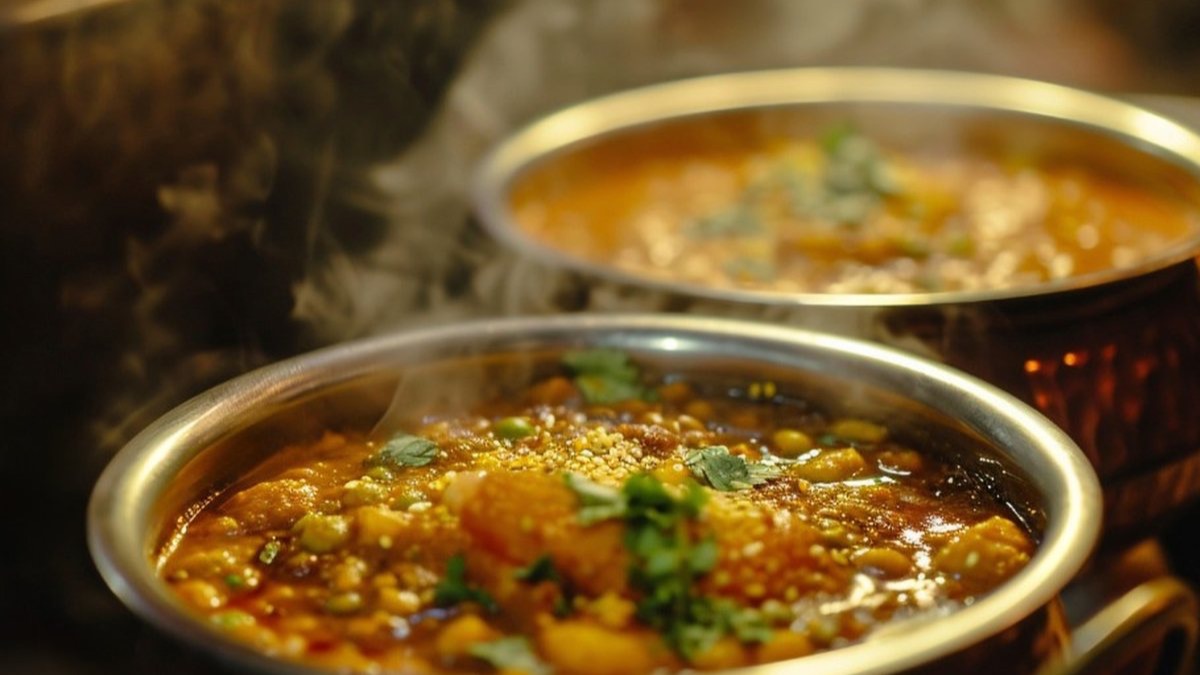
Search for “protein ke liye veg khana” and you are usually told to buy a tub of protein powder or start eating eggs. If you are vegetarian, you need neither. The high-protein vegetarian foods India already eats every day are dal, chana, rajma, soya, paneer, dahi, milk, besan, sprouts, peanuts and til. What matters is how much of them adds up to your daily target.
For body mass index (BMI), waist, tests and treatment, see our weight management guide for Indians. If you take insulin or sugar-lowering tablets, agree any change in how you eat with your doctor first.
How much protein you need in a day
ICMR-NIN recommends 0.83 g of protein per kg of body weight a day for healthy men and women. That is about 54 g for a 65 kg adult, and ICMR-NIN says the figure is the same whatever your gender or activity level.
| Body weight | Daily protein at 0.83 g per kg (our arithmetic, rounded) |
|---|---|
| 50 kg | About 42 g |
| 60 kg | About 50 g |
| 70 kg | About 58 g |
| 80 kg | About 66 g |
ICMR-NIN’s sample diets are built for a reference man of 65 kg and a reference woman of 55 kg, both with a healthy BMI. If you weigh well above a healthy weight, ask a dietitian which weight to use rather than multiplying your current weight.
A few situations change the picture:
- Losing weight. ICMR-NIN says getting about 15% of energy from protein may help protect muscle during a typical weight-loss diet. More protein does not burn fat.
- Building muscle. Protein is used for muscle only with enough food overall and regular strength exercise. ICMR-NIN notes that intakes above about 1.6 g/kg a day add nothing further to muscle gained from resistance training.
- Pregnancy and breastfeeding. ICMR-NIN adds 8 g a day in the second trimester, 18 g in the third, and about 11–14 g while breastfeeding. Get individual advice.
- After menopause. Our menopause diet guide compares ICMR-NIN’s figure with the Indian Menopause Society’s.
Do Indian vegetarians get enough protein?
Often enough in grams, but not always from the right foods. Two Indian sources describe the gap differently.
- ICMR-NIN says an adult’s daily diet often provides 60–70 g of protein, more than required, and that the real challenge is quality: getting all the essential amino acids.
- The Indian Council of Medical Research–India Diabetes (ICMR-INDIAB) survey, which analysed the diets of 18,090 adults and was published in 2025, found protein supplied only about 12% of energy, which its authors call low against a 15% guideline figure. Most came from plant foods, largely cereals, with little from dairy.
ICMR-NIN adds that pulses, meat, poultry and fish give Indians only 6–9% of daily energy, against the 14% it recommends. Our reading: many plates reach the gram target because so much rice and roti is eaten, but the share from dal, dahi, paneer and soy is small. Add more of those, not more cereal.
Protein quality: why dal-chawal works
Cereals and pulses fill each other’s gaps. ICMR-NIN explains that cereals are low in an amino acid called lysine but richer in methionine, while pulses are the reverse. Eaten together, they supply all nine essential amino acids.
- The 3:1 ratio. ICMR-NIN suggests about 3 parts cereal to 1 part pulse by raw weight, for example 60 g of rice with 20 g of dal. Dal-chawal, khichdi, idli-sambar, rajma-roti and dosa already follow this pattern. Its weight-management chapter, and our hub, mention 3:1 or 5:1; this page uses 3:1, the figure in ICMR-NIN’s protein guidance.
- Milk helps. ICMR-NIN says adding 250 ml of milk a day further improves the amino-acid balance of a vegetarian diet.
- Nuts and seeds fill the pulse gap. ICMR-NIN lists cereals, millets, nuts and seeds as the complement for methionine, which pulses lack.
- Digestibility. Most vegetarian foods have a protein digestibility of 70–85%, according to ICMR-NIN; animal proteins are absorbed more easily.
High-protein vegetarian foods in India: protein per 100 g
The figures below come from the Indian Food Composition Tables 2017 (IFCT), published by ICMR-NIN. IFCT values are per 100 g of the edible part of raw food. Cooked dal is mostly water, so 100 g of cooked dal has far less protein than 100 g of dry dal. The serving column is our own arithmetic from raw weights; household katoris and recipes vary.
| Food | Protein per 100 g, raw (IFCT 2017) | An everyday serving and its protein (our arithmetic) |
|---|---|---|
| Soybean, whole | 35.6 g (brown), 37.8 g (white) | 30 g dry, soaked and cooked: about 11 g |
| Masoor dal | 24.4 g | 30 g raw (about 2 tablespoons, roughly a small katori cooked): about 7 g |
| Moong dal | 23.9 g | 30 g raw: about 7 g |
| Urad dal | 23.1 g | 30 g raw: about 7 g |
| Whole moong (for sprouts) | 22.5 g | 40 g dry, sprouted into about a katori: about 9 g |
| Toor (arhar) dal | 21.7 g | 30 g raw: about 6.5 g |
| Chana dal (besan is ground chana dal) | 21.6 g | 40 g besan, about 2 chillas: about 8.5 g |
| Kulthi (horse gram) | 21.7 g | 30 g raw: about 6.5 g |
| Lobia (cowpea) | 20.4 g | 30 g raw: about 6 g |
| Rajma, red | 19.9 g | 30 g raw: about 6 g |
| Kala chana, whole | 18.8 g | 30 g raw or a fistful roasted: about 5.5 g |
| Paneer | 18.9 g (with 24.8 g fat) | 50 g: about 9.5 g |
| Milk, buffalo | 3.7 g | 1 glass (200 ml): about 7.5 g |
| Milk, cow | 3.3 g | 1 glass (200 ml): about 6.5 g |
| Groundnut (peanuts) | 23.7 g | A small fistful (30 g): about 7 g |
| Garden cress seeds (halim) | 23.4 g | 1 teaspoon (5 g): about 1 g |
| Til (sesame), white | 21.7 g | 1 tablespoon (about 10 g): about 2 g |
| Alsi (linseed) | 18.6 g | 1 tablespoon (about 10 g): about 2 g |
| Almonds | 18.4 g | About 10 almonds (12 g): about 2 g |
| Wheat atta | 10.6 g | 2 phulkas (60 g atta): about 6 g |
| Bajra | 11.0 g | 2 bajra rotis (60 g flour): about 6.5 g |
| Rice, milled | 7.9 g | 1 katori cooked (50 g raw): about 4 g |
Three foods are missing from IFCT, so we used US Department of Agriculture (USDA) values as a guide: plain whole-milk yogurt has about 3.5 g per 100 g, so a 150 g katori of dahi gives about 5 g; firm tofu has about 17 g and soft (regular) tofu about 8 g; and defatted soy flour has about 51 g. Soya chunk labels differ, so check your pack.
Getting the most from dairy, soy, pulses and nuts
Dairy: paneer, dahi and milk
Paneer is protein-rich but also rich in fat, so think of 50 g as a serving, not a whole bowl. Dahi and milk give less protein per katori but are easy to add at every meal; ICMR-NIN’s 2,000 kcal plate includes 300 ml of milk or curd a day.
Soy: chunks and tofu
Soybean is the most protein-dense food in IFCT’s pulse table. Soya chunks are extruded from defatted soy flour, according to India’s National Institute of Food Technology Entrepreneurship and Management, which is why they are so concentrated. A small fistful (25 g dry) swells into about a katori and gives roughly 13 g of protein, by our arithmetic.
One nuance: ICMR-NIN’s processing table lists commercially produced soy chunks and tofu “with additives” among extensively processed foods. Pick plain chunks and tofu with a short ingredient list, and treat them as one protein among many, alongside whole soybean, dal and chana.
Pulses, sprouts and besan
Rotate your dals: most give 20–24 g per 100 g raw. ICMR-NIN notes that protein from pulses costs less than protein from meat, eggs or milk, and that pulses are low in fat and high in fibre. Sprouting improves iron absorption, according to ICMR-NIN. Sprouts weigh more than the dry grain because they absorb water, so compare them by the dry amount you started with. Besan counts as a pulse: chilla, dhokla, missi roti and kadhi all add protein to a cereal meal.
Nuts and seeds
Peanuts, til, alsi and halim seeds carry 18–24 g of protein per 100 g, but they are also high in fat and calories, so keep portions small. ICMR-NIN’s 2,000 kcal plate allows about 35 g of nuts and seeds a day: think a spoon of til or peanuts in poha, chutney or sabzi.
Two example days that reach about 50 g
These days show one way a 60 kg adult could reach roughly 50 g of protein. They are examples, not a prescription, and give no calorie target. Protein per meal is our rounded arithmetic from IFCT raw weights (USDA for dahi and soya chunks); vegetables and the milk in chai add a little more. If you take insulin or sugar-lowering tablets, agree any change with your doctor first; our Indian diabetes diet chart shows the full plate.
Example day 1: vegetarian (with dairy)
| Meal | Example | Protein (about) |
|---|---|---|
| Breakfast | 2 besan chillas (40 g besan) with onion, tomato and palak; 1 katori dahi (150 g) | 14 g |
| Evening | Chai with a fistful (30 g) of roasted chana | 6 g |
| Lunch | 2 phulkas (60 g atta), 1 katori rajma (30 g raw), lauki sabzi, salad | 12 g |
| Dinner | 1 katori rice (50 g raw), 1 katori moong dal (30 g raw), palak paneer with 50 g paneer | 21 g |
| Total | About 52 g |
Example day 2: vegan-leaning (no dairy)
| Meal | Example | Protein (about) |
|---|---|---|
| Breakfast | 2 pesarattu (moong dosa) from 50 g whole moong, with peanut chutney (15 g peanuts) | 15 g |
| Lunch | 1 katori rice (50 g raw), sambar with 30 g toor dal, soya chunk curry (25 g dry chunks), a vegetable poriyal | 23 g |
| Evening | 1 katori moong sprout chaat (40 g dry moong) with lemon and onion | 9 g |
| Dinner | 2 rotis (60 g atta), kala chana curry (30 g raw), mixed vegetable sabzi | 12 g |
| Total | About 59 g |
The plant-only day lands a little higher on purpose, because plant protein is digested less completely. ICMR-NIN says vegans who eat a varied diet of vegetables, beans, grains, nuts and seeds have no difficulty getting enough protein, with the 3:1 cereal-pulse combination as the most efficient route.
Do you need protein powder?
No. In ICMR-NIN’s words, “Protein powders are unnecessary for normal healthy life.” It also says:
- Most athletes can get enough protein from food alone, and supplements on top of a balanced diet do not build more muscle.
- Large amounts of protein as a supplement over long periods are linked with bone mineral loss.
- Whey is rich in branched-chain amino acids, which recent evidence suggests may raise the risk of some long-term diseases.
- Powders may contain added sugar, sweeteners and artificial flavouring.
If a doctor has advised a nutrition supplement for a medical reason, such as recovery from illness, follow their advice.
Kidney disease, vitamin B12 and other cautions
Kidney disease: do not raise protein on your own
ICMR-NIN warns that high protein intake may damage the kidneys or worsen kidney function in people who already have kidney disease. The US National Institute of Diabetes and Digestive and Kidney Diseases (NIDDK) adds that some people with chronic kidney disease need moderate protein, too little risks malnutrition, and people on dialysis may need more. Agree your amount with your doctor or a kidney dietitian.
Vitamin B12 for vegetarians
ICMR-NIN names B12 as a nutrient of concern for vegetarians and notes that milk has only a small amount; curd, eggs and flesh foods are other sources. The US National Institutes of Health’s Office of Dietary Supplements says plant foods have no B12 unless fortified, that vegetarians and vegans might not get enough, and that deficiency symptoms can take years to appear. Some long-term medicines, including a common diabetes medicine, can lower B12 absorption. If you eat little or no dairy, ask your doctor whether a B12 test suits you.
Allergies and eating disorders
- ICMR-NIN lists milk protein, peanuts, tree nuts and soybean among common allergy-causing foods.
- If you have a current or past eating disorder, counting grams can do harm; work with a clinician who knows your history.
When to see a doctor
Most healthy adults can add protein foods on their own. See a doctor in these situations. The full list is in the hub’s section on when to see a doctor.
Emergency: get help now
- Trouble breathing, or swelling of the lips, tongue or throat, after eating a food such as peanuts, soy or milk.
- Very low blood sugar in someone with diabetes who is not responding normally, has a seizure or passes out.
- Swelling with breathlessness, chest pain or feeling faint.
Prompt review: within days
- New swelling of the face, legs or tummy.
- Numbness or tingling in the hands or feet, or unusual tiredness with pale skin, especially if you eat little or no dairy.
- Bingeing, making yourself sick or using laxatives, or eating very little with dizziness or fainting.
Routine review: before you change your diet
- You have chronic kidney disease or are on dialysis.
- You are pregnant, breastfeeding or planning pregnancy.
How Disha can help
Disha is an AI health coach that chats and calls in Hindi, English and Hinglish. It can help you add dal, dahi, paneer, soya or sprouts to the meals you already cook, spread protein across the day, and keep up movement and sleep habits. It does not diagnose, prescribe or replace your doctor, and it does not provide emergency care. Read how Disha coaching works.
This is not medical advice. This page is general education for adults (18+). Do not start, stop or change any medicine or supplement because of this page. In an emergency, call 112.
Frequently asked questions
How much protein does a vegetarian need per day?
The same as anyone else. ICMR-NIN recommends 0.83 g of protein per kg of body weight a day for healthy adults, about 54 g for a 65 kg person and about 50 g for 60 kg. It does not change with gender or activity. Needs rise in pregnancy and breastfeeding. If you weigh well above a healthy weight, ask a dietitian which weight to calculate from.
Which Indian vegetarian food has the most protein?
Soybean leads the Indian Food Composition Tables at about 36–38 g per 100 g raw, and soya chunks, made from defatted soy flour, are even more concentrated. Among everyday foods, dals such as masoor, moong and urad give 23–24 g per 100 g raw, peanuts about 24 g and paneer about 19 g. Remember that cooked dal is mostly water, so a katori gives far less.
How much protein is in one katori of dal?
It depends on how much dry dal went in. By our arithmetic from the Indian Food Composition Tables, a small katori of home-style dal made from about 30 g of raw dal gives roughly 6–7 g of protein. A thin, watery dal gives less; a thick dal gives more. Eating it with rice or roti in about a 3:1 cereal-to-pulse ratio improves its protein quality.
Is paneer or soya better for protein?
Both are good; they suit different needs. Per 100 g, paneer has about 19 g of protein but also about 25 g of fat. Soya chunks are far more concentrated, at roughly 50 g per 100 g dry depending on the brand. Choose plain chunks with a short ingredient list, keep paneer portions to about 50 g, and rotate both with dal, chana and dahi.
Can vegetarians get enough protein without protein powder?
Yes. ICMR-NIN says protein powders are unnecessary for normal healthy life and that even most athletes can meet their needs from food. It also notes that vegans eating a varied diet have no difficulty getting enough protein. Dal with rice or roti, dahi, milk, paneer, soya, sprouts, besan and a few nuts or seeds across the day reach the target for most adults.
Is a high-protein diet safe for everyone?
No. ICMR-NIN warns that high protein intake may worsen kidney function in people who already have kidney disease, and that large amounts of protein supplements over long periods are linked with bone mineral loss. If you have kidney disease, agree your protein amount with your doctor. For healthy adults, reaching 0.83 g per kg from ordinary food is the goal, not going far beyond it.
Do vegetarians need to worry about vitamin B12?
It is worth knowing about. ICMR-NIN names B12 as a nutrient of concern for vegetarians, and milk has only a small amount. The US Office of Dietary Supplements says plant foods have no B12 unless fortified. If you eat little or no dairy, or take long-term diabetes medicine, ask your doctor whether a B12 test suits you. Do not self-prescribe supplements.
Sources
- ICMR–National Institute of Nutrition. Dietary Guidelines for Indians. 2024. Guideline. Supports: protein allowance of 0.83 g/kg (54 g for 65 kg) regardless of gender or activity; reference adults of 65 kg and 55 kg; 15% protein energy during weight loss; protein used for muscle only with enough energy and exercise; no further gains above about 1.6 g/kg; extra protein in pregnancy and breastfeeding; adult diets often giving 60–70 g with quality as the challenge; pulses and flesh foods at 6–9% of energy against 14%; lysine and methionine; the 3:1 cereal–pulse ratio (and 3:1 or 5:1 in the weight chapter); 250 ml milk; 70–85% digestibility; vegans and varied diets; pulses as the least expensive protein; sprouting and iron; 300 ml milk or curd and 35 g nuts and seeds on the 2,000 kcal plate; protein powders unnecessary, bone mineral loss, whey and branched-chain amino acids, additives; high protein and existing kidney disease; B12 as a nutrient of concern and its food sources; commercially produced soy chunks and tofu with additives in the processing table; common food allergens.
- Longvah T, Ananthan R, Bhaskarachary K, Venkaiah K. Indian Food Composition Tables 2017. ICMR–National Institute of Nutrition, 2017. Supports: protein (and paneer fat) per 100 g edible portion of raw pulses, soybean, paneer, milk, nuts, seeds and cereals; values refer to raw food.
- Anjana RM, Sudha V, Abirami K, Gayathri R, Manasa VS, Deepa M, Pradeepa R, Unnikrishnan R, et al. Dietary profiles and associated metabolic risk factors in India from the ICMR–INDIAB survey-21. Nature Medicine, 2025. Observational (cross-sectional) national survey. Supports: diets of 18,090 adults; protein at about 12% of energy, described as low against a 15% guideline figure; plant protein as the largest share and little from dairy and animal foods.
- US Department of Agriculture. FoodData Central: Tofu, raw, firm, prepared with calcium sulfate (with the entries for regular tofu, defatted soy flour and plain whole-milk yogurt). SR Legacy data, accessed 25 September 2026. Supports: protein of about 17.3 g (firm tofu), 8.1 g (regular tofu), 51.5 g (defatted soy flour) and 3.5 g (plain whole-milk yogurt) per 100 g, used because IFCT 2017 has no entries for these foods.
- National Institute of Food Technology Entrepreneurship and Management (NIFTEM). Processing of soya chunks. PMFME scheme training material, 2022. Supports: soya chunks are made from defatted soy flour, a by-product of soy oil extraction, by extrusion.
- National Institutes of Health, Office of Dietary Supplements. Vitamin B12: Fact Sheet for Consumers. Updated 15 December 2023. Supports: plant foods have no B12 unless fortified; vegetarians and vegans might not get enough; deficiency symptoms can take years to appear; numbness, tingling, tiredness and pale skin as signs; a common diabetes medicine may reduce absorption.
- National Institute of Diabetes and Digestive and Kidney Diseases. Healthy Eating for Adults with Chronic Kidney Disease. Last reviewed January 2025. Supports: some people with chronic kidney disease need moderate protein; too little protein risks malnutrition; people on dialysis may need more; working with a dietitian or health professional on the amount.
Related reads
- Weight management in India: BMI, tests and daily care: the hub; covers Asian BMI and waist cut-offs, tests, treatment and red flags, and gives protein only a paragraph.
- Indian diet plan for weight loss: your own food, in better ratios: the full plate in katoris, oil and sugar limits, and three example days.
- Belly fat and waist size: why Indians face risk at lower numbers: how to measure your waist and what reduces belly fat.
- PCOS diet in India: a practical plate for every meal with PCOS.
- Menopause diet: calcium, protein and bone health: protein and calcium needs after menopause.
- All weight management articles: every guide in this section.
- Calorie counter for Indian household servings: estimates for dal, roti, paneer and more.
- BMI calculator with Indian cut-offs: a screening number, best read alongside your waist.