If you have just been told your thyroid is underactive, the next question is usually about food: "thyroid mein kya khaye", and what should go.
For what hypothyroidism is, how it is diagnosed and how it is treated, start with our thyroid hub on symptoms, tests and treatment.
The thyroid-friendly Indian plate
There is no special thyroid plate; the one Indian Council of Medical Research–National Institute of Nutrition (ICMR-NIN) recommends for all Indian adults works well. Its "My Plate for the Day" in the Dietary Guidelines for Indians 2024 draws food from at least eight groups. Vegetables, fruits, green leafy vegetables and roots make up about half the day's food, and cereals and millets are limited to 45% of energy, with pulses, eggs, fish or meat, nuts and milk or curd making up the rest.
At lunch or dinner, that looks like this:
- Half the plate: sabzi and salad. Gobhi, palak, lauki, bhindi, beans and seasonal greens all count.
- A quarter: protein: a katori of dal, chana or rajma, paneer, dahi, eggs, fish or chicken.
- A quarter: roti, rice or a millet such as bajra, jowar or ragi.
- On the side: a katori of dahi or a glass of milk during the day, and cooking made with iodised salt.
Filling half the plate with sabzi keeps the roti and rice portion in check without counting anything, which helps if your weight went up before diagnosis. None of this changes your thyroid hormone level; your tablet does that.
Hypothyroidism diet: what to eat, what is fine, what to limit
Very few foods are off limits with hypothyroidism. Most of the "avoid" lists shared on WhatsApp remove good food for no reason.
| Group | Foods | Why |
|---|---|---|
| Eat regularly | Seasonal sabzi and leafy greens, dal, chana, rajma, fruit, whole grains and millets in your cereal portion | The base of ICMR-NIN's plate, with fibre, protein and micronutrients |
| Eat regularly | Milk, dahi, paneer, eggs, fish | The National Institutes of Health (NIH) lists seafood, eggs, milk and milk products among the best food sources of iodine |
| Eat regularly | Iodised salt, within 5 g a day (about one teaspoon) | ICMR-NIN's advice for everyone: "Use iodized salt", with a daily maximum of 5 g |
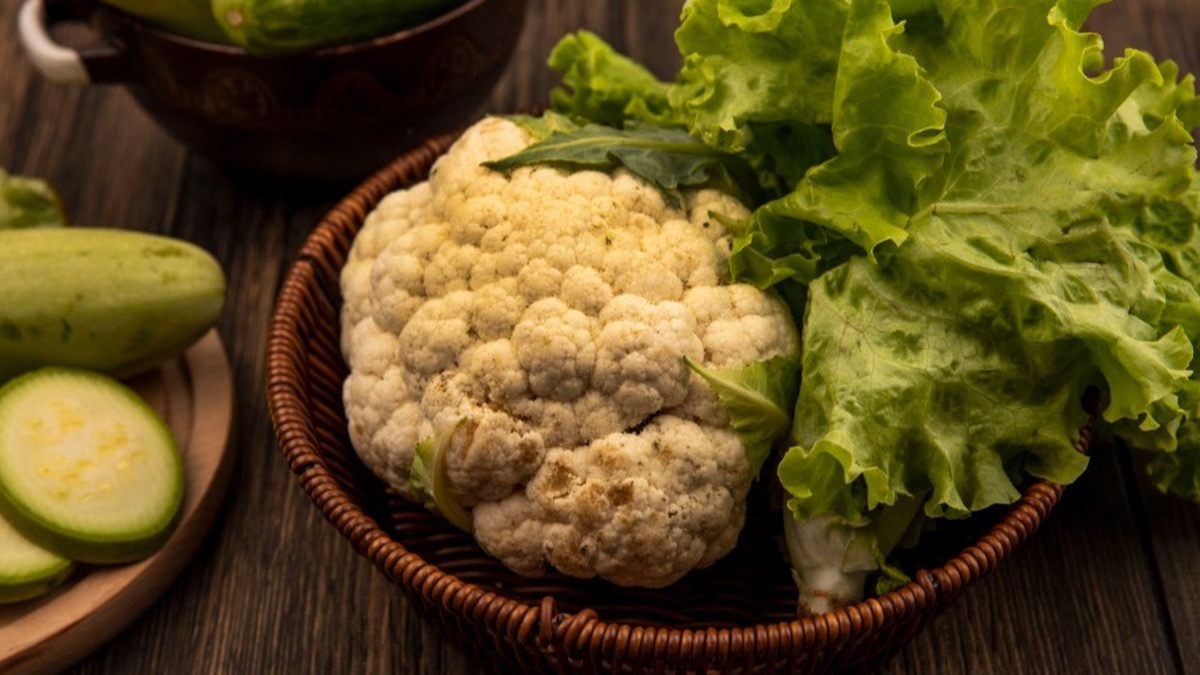
| Fine in normal amounts | Phool gobhi, patta gobhi, sarson, mooli, bajra, ragi, jowar, shakarkandi, sabudana | They contain goitrogens, but these matter mainly when iodine intake is low; cooked, normal portions are fine |
| Fine in normal amounts | Soya chunks, tofu, soya milk | Fine as part of meals; keep them away from the time you take your tablet |
| Fine in normal amounts | Tea and coffee | Not with or just after your tablet; ICMR-NIN also advises keeping them an hour away from meals and within 300 mg of caffeine a day |
| Limit | Namkeen, papad, pickles, instant noodles, chips, sauces, bakery snacks | ICMR-NIN lists these as major sources of hidden salt; it advises minimising high fat, sugar and salt and ultra-processed foods |
| Limit | Sweets, sugary drinks, fried snacks | Extra calories that make weight harder to manage |
| Avoid unless your doctor advises | Kelp or seaweed tablets, iodine drops, selenium capsules sold "for thyroid" | Too much iodine can itself cause thyroid problems, and selenium evidence is mixed |
| Avoid as your only salt | Sendha, kala namak or Himalayan pink salt in everyday cooking | These traditional salts do not have to be iodised in India; keep them for vrat or chaat |
Iodine: get it from salt and food, not capsules
Your thyroid needs iodine to make its hormones, and in India the main dependable source is iodised salt. Milk, dahi, eggs and fish add more.
Sendha and pink salt are not a thyroid upgrade
India's food regulator, Food Safety and Standards Authority of India (FSSAI), requires common white salt sold for eating to be iodised, but in 2019 it clarified that "traditional salts such as rock salt, black salt, Himalayan pink salt, etc. shall not be mandatorily iodised." ICMR-NIN adds that the sodium content of pink and black salt is almost the same as ordinary salt, so they are not healthier either.
If your family has switched to sendha namak for daily cooking because it seems more natural, switch back to a packet that says "iodised" and keep sendha for fasting days.
More iodine is not better
Extra iodine can harm. National Institutes of Health (NIH) notes that high intakes can cause the same problems as too little, including goitre, raised thyroid-stimulating hormone (TSH) and hypothyroidism, and that people with autoimmune thyroid disease, such as Hashimoto's, may react to intakes that are safe for others. Do not add kelp tablets, iodine drops or extra salt "for the thyroid".
Selenium: ask first
Selenium helps the body make and use thyroid hormone. NIH's summary is mixed: some trials found selenium supplements lowered certain thyroid antibodies in autoimmune thyroiditis, while others found no effect on thyroid function or quality of life. The American Thyroid Association recommends against selenium supplements for pregnant women with thyroid autoimmunity. Get selenium from ordinary food such as eggs, fish, meat, dairy and grains, and discuss any supplement with your doctor.
When to eat after your thyroid tablet
For many people, tablet timing matters more than any food choice, because food, tea and some supplements reduce how much hormone you absorb. The National Health Service (NHS) advice for levothyroxine, the usual thyroid tablet, is to take it on an empty stomach, 30 to 60 minutes before your first meal, any drink with caffeine such as tea or coffee, or any other medicine. Take it at the same time each day, swallowed whole with a glass of water.
In an Indian morning, that means:
- Take the tablet on waking, with plain water only: not with milk, chai or coffee.
- Wait 30 to 60 minutes before breakfast or other medicines.
- Keep a prescribed calcium or iron tablet, a multivitamin, an antacid, or a fibre supplement such as isabgol at least 4 hours after your thyroid tablet, as MedlinePlus advises. Lunch or dinner often works.
- Soya and high-fibre diets can change absorption. MedlinePlus advises talking to your doctor if you eat a lot of soy products or follow a high-fibre diet. Keep your eating pattern steady, and mention big changes, because your dose is set around your usual routine.
If mornings do not work for you, for example because of shift work, ask your doctor whether a bedtime dose suits you; MedlinePlus notes some doctors suggest it. Do not change the time, dose or brand on your own.
Example thyroid diet chart: a veg day with non-veg swaps
This is an example of proportions, not a prescription, and it has no calorie target. Adjust portions to your appetite, activity and doctor's advice, and use iodised salt in cooking. If you also have diabetes and take insulin or sugar-lowering tablets, agree any change in meals with your doctor first.
| Time | Vegetarian example | Non-veg variation |
|---|---|---|
| On waking | Thyroid tablet with a glass of water, nothing else | Same |
| 30–60 minutes later | Plain water | Same |
| Breakfast | 2 besan or moong dal chillas with grated vegetables, and 1 katori dahi | 2-egg bhurji with onion and tomato, and 1 roti or 2 slices of whole-wheat bread |
| Mid-morning | 1 fruit, such as guava, orange or papaya | Same |
| Lunch | 2 rotis or 1 katori rice, 1 katori dal, 1 katori gobhi-matar sabzi, salad, 1 katori dahi | 2 rotis or 1 katori rice, 1 katori fish curry, 1 katori sabzi, salad |
| Afternoon, if prescribed | Calcium or iron tablet, at least 4 hours after the thyroid tablet | Same |
| Evening | 1 fistful roasted chana, and tea an hour away from meals | Same, or a boiled egg |
| Dinner | 2 bajra or jowar rotis, 1 katori palak paneer, 1 katori mixed-vegetable sabzi | 2 rotis, 1 katori chicken curry with vegetables, 1 katori sabzi |
| Bedtime, if you like | 1 glass milk or haldi doodh, without added sugar | Same |
On busy days, a plate of vegetable poha or upma with a katori of dahi is a fine swap for breakfast.
Weight gain and tiredness with thyroid: what to expect
Thyroid-related weight gain is real but usually modest. The American Thyroid Association says most of it is salt and water, and for most people about 5–10 pounds (roughly 2–4.5 kg) may be related to the thyroid. Treatment returns weight to what it was before the thyroid slowed; it is not a weight-loss treatment.
The American Thyroid Association (ATA) adds two points worth knowing. If your other symptoms improve with treatment but your weight does not, the thyroid was probably not the only cause. Once your levels are normal, your ability to gain or lose weight is the same as anyone else's. Check where you stand with Disha's body mass index (BMI) calculator with Indian cut-offs, which counts 23 and above as overweight for Indian adults.
Avoid crash diets and very low-calorie plans. They are hard to sustain, and a sudden large change in weight can also mean your tablet dose needs checking: the ATA advises calling your doctor if you gain or lose 10 pounds (about 4.5 kg) or more.
Tiredness usually improves as your levels settle, but not overnight. The ATA says blood tests are usually repeated 6 to 8 weeks after starting or changing a dose. If you are still very tired once your TSH is in range, tell your doctor rather than assuming it is the thyroid; anaemia, poor sleep and low mood are common look-alikes.
Gluten-free and other Hashimoto's diets
A gluten-free diet is not needed for most people with Hashimoto's, the autoimmune cause of most hypothyroidism. The evidence is thin. A 2023 meta-analysis in Frontiers in Endocrinology pooled four small studies with 87 patients, most followed for about six months. TSH fell slightly and free thyroxine (T4) rose slightly, while the fall in thyroid antibodies did not reach statistical significance. The authors concluded the evidence is "not yet sufficient" to recommend a gluten-free diet to all patients.
Coeliac disease is the exception. The NHS lists autoimmune thyroid disease, including an underactive thyroid, among the reasons to be tested for coeliac disease, and says you must keep eating gluten until testing is complete. If you are thinking of going gluten-free, or have bloating, loose motions or unexplained anaemia, ask your doctor about a coeliac test before cutting out atta. Dropping roti without a reason makes meals harder and less varied, without a proven thyroid benefit.
When to see a doctor
Emergency: get help now
- Severe drowsiness, confusion or unresponsiveness, feeling very cold, or slow breathing in someone with severe or untreated hypothyroidism, especially an older person. This can signal myxoedema coma, which is rare but an emergency.
- Difficulty breathing with a swelling in the neck.
- Chest pain, or palpitations with breathlessness or fainting.
Prompt review: within days
- You are pregnant or planning a pregnancy: your dose and iodine needs usually change.
- A new or growing lump or swelling in the neck, trouble swallowing, or a hoarse voice.
- Rapid, unexplained weight gain or loss of about 4.5 kg or more.
- A slow pulse with marked tiredness, puffiness or feeling cold all the time.
- A racing heartbeat, shakiness or heavy sweating after a dose change, which can mean the dose is too high.
Routine review
- Symptoms that return or do not improve on treatment.
- Before starting or stopping calcium, iron, biotin, iodine or selenium supplements, or making a big diet change such as going gluten-free or eating much more soya.
- If you have missed doses, or want to change or stop your tablet, even when you feel better: never do this without your doctor.
The hub has the full list of thyroid warning signs.
How Disha can help
Disha is an AI health coach that chats and calls in Hindi, English and Hinglish. After an onboarding call of about 15–20 minutes with Disha, the AI, it helps you build meals like the ones above from your own kitchen, and fit tablet timing, movement and sleep into your day. It does not diagnose, change medicine or replace your doctor. See how Disha coaching works.
This is not medical advice. This page is general education for adults (18+), not a diagnosis or treatment plan. Do not start, stop or change a thyroid medicine or any supplement because of it. If you are pregnant, planning a pregnancy, breastfeeding, have diabetes treated with medicine, or have a current or past eating disorder, get individual advice before changing how you eat. In an emergency, call 112; Disha does not provide emergency care.
Frequently asked questions
Which foods should I avoid with hypothyroidism?
Very few. Limit salty packaged snacks, sweets and ultra-processed food, as ICMR-NIN advises for everyone. Do not use sendha or pink salt as your only everyday salt, because it need not be iodised. Avoid iodine, kelp or selenium supplements unless your doctor advises them. Most vegetables, dals, millets and dairy are fine; what matters more is taking your tablet on an empty stomach.
Can I eat soya, gobhi or millets with an underactive thyroid?
Yes, in normal cooked portions. These foods contain goitrogens, but NIH says they are a concern mainly when iodine intake is low; with iodised salt and a varied diet, reasonable amounts are not a problem. Keep soya away from the time you take your tablet, and tell your doctor if you start eating a lot of it, as it can affect absorption.
Is iodised salt enough, or do I need an iodine supplement?
For most adults, iodised salt within ICMR-NIN's 5 g daily limit, plus milk, dahi, eggs or fish, is enough. Do not take iodine supplements on your own. NIH notes that people with autoimmune thyroid disease can have problems with iodine intakes safe for others, and excess iodine can itself cause hypothyroidism. Pregnancy changes iodine needs, so ask your doctor then.
Does a gluten-free diet help Hashimoto's?
The evidence is too weak to recommend it for everyone. A 2023 meta-analysis of four small studies, 87 patients in all, found slight changes in TSH and free T4, and no statistically significant fall in thyroid antibodies. The NHS does list autoimmune thyroid disease as a reason for coeliac testing, so ask your doctor about a test first, and keep eating gluten until it is done.
Can diet cure hypothyroidism?
No. Diet cannot replace the hormone your thyroid is not making, and most people need their tablet for life. A balanced Indian diet with iodised salt supports your weight, energy and heart, and good tablet timing helps it work. Some thyroiditis after a virus or pregnancy settles on its own, but that is not due to diet. Never stop your tablet because you feel better.
When should I eat after taking levothyroxine?
The NHS advises taking it on an empty stomach with water, 30 to 60 minutes before your first meal, tea or coffee, or other medicines, at the same time each day. Keep calcium, iron, multivitamins, antacids and fibre supplements such as isabgol at least 4 hours after it. If mornings are hard, ask your doctor whether another time suits you.
Why am I gaining weight with thyroid?
An underactive thyroid slows your metabolism, but the American Thyroid Association says the gain is usually modest, about 2–4.5 kg for most people, and mostly salt and water. Treatment brings weight back to where it was before the thyroid slowed. If other symptoms improve but weight does not, other causes such as food, activity and sleep are likely involved.
Sources
- ICMR–National Institute of Nutrition. Dietary Guidelines for Indians. 2024. Supports: "My Plate for the Day" with at least eight food groups, vegetables and fruits about half the plate and cereals within 45% of energy; "Use iodized salt" and a maximum of 5 g salt a day; similar sodium in pink and black salt; hidden salt in processed foods; tea and coffee an hour away from meals and caffeine within 300 mg a day.
- Food Safety and Standards Authority of India (FSSAI), reproducing an FNB News report. FSSAI, through notification, prohibits sale of non-iodised common salt. 2019. Supports: mandatory iodisation of common salt for direct consumption, and the clarification that rock salt, black salt and Himalayan pink salt need not be iodised.
- NIH Office of Dietary Supplements. Iodine: Fact Sheet for Health Professionals. Current. Supports: seafood, eggs, milk and milk products as iodine sources; goitrogens a concern mainly where iodine deficiency is common; harms of excess iodine, including in autoimmune thyroid disease.
- NIH Office of Dietary Supplements. Selenium: Fact Sheet for Health Professionals. Current. Supports: selenium's role in thyroid hormone metabolism; mixed trial results in autoimmune thyroiditis; the ATA recommendation against selenium supplements in pregnant women with thyroid autoimmunity; food sources.
- NHS. Levothyroxine: a medicine for an underactive thyroid. Reviewed 2026. Supports: empty stomach, 30 to 60 minutes before the first meal, caffeine or other medicines; same time each day with water; lifelong treatment; interactions with calcium and iron supplements, antacids and biotin; telling your doctor about pregnancy.
- NHS. Underactive thyroid (hypothyroidism). Current. Supports: treatment with hormone replacement, usually for life; dose likely to change in pregnancy; myxoedema coma as a rare emergency, more common in older people.
- MedlinePlus Medical Encyclopedia, US National Library of Medicine. Hypothyroidism. Reviewed 2024. Supports: soy and high-fibre diets affecting absorption; waiting at least 4 hours before fibre, calcium, iron, multivitamins or antacids; asking about bedtime dosing; not stopping medicine when you feel better; slow heart rate as a late symptom; signs of myxoedema coma.
- American Thyroid Association. Thyroid and Weight, with the Hypothyroidism patient page. Current. Supports: about 5–10 pounds of weight gain, mostly salt and water; treatment returning weight to its earlier level; normal weight regulation once levels are normal; blood tests 6 to 8 weeks after a dose change; calling the doctor for a weight change of 10 pounds or more, or when starting or stopping calcium, iron or biotin.
- Piticchio T, Frasca F, Malandrino P, Trimboli P, Carrubba N, Tumminia A, Vinciguerra F, Frittitta L. Effect of gluten-free diet on autoimmune thyroiditis progression in patients with no symptoms or histology of celiac disease: a meta-analysis. Frontiers in Endocrinology, 2023. Supports: four studies with 87 patients over about six months; small TSH and free T4 changes; antibody changes not statistically significant; evidence not yet sufficient to recommend a gluten-free diet to all.
- NHS. Coeliac disease: diagnosis. Reviewed 2023. Supports: testing for coeliac disease in people with autoimmune thyroid disease, and eating gluten until testing is complete.
Related reads
- Thyroid hub: symptoms, tests and treatment: the overview this page builds on; it covers diagnosis, treatment and the full warning-sign list.
- Goitrogens in Indian cooking: the food-by-food detail on gobhi, sarson, soya and millets.
- TSH, T3 and T4 levels explained: how to read the report your doctor uses to set your dose.
- All thyroid articles: every thyroid guide in one place.
- Calorie counter for Indian household servings: check portions of roti, rice and dal, with values treated as estimates.
- BMI calculator with Indian cut-offs: a screening number, not a full picture of your health.